Fly, Nahji, Fly! Moribito: Guardian of the Spirit
That’s what Moribito: Guardian of the Spirit is about. The slow, inevitable passage of the seasons, in all its immensity.
2007 was one of the best years for anime ever. You had Hiroyuki Imaishi and his team at Gainax reinventing giant robots with Gurren Lagann. Mononoke pushing the boundaries of anime aesthetics. Mitsuo Iso delivering his gorgeous cyberpunk children’s series Dennou Coil. The scrambled 1930s cool of Baccano. Not to mention cult classics like Lucky Star and Gakuen Utopia Manabe Straight!, the excruciatingly violent Shigurui, and the debut of Naruto Shippuden.
Then there’s Moribito: Guardian of the Spirit. A luxurious adaptation of Nahoko Uehashi’s novel by Ghost in the Shell: Stand Alone Complex director Kenji Kamiyama, it’s the kind of fantasy epic that we rarely see in the medium. I’d watched the first episode dubbed on Adult Swim ages ago but never managed to make it through the whole thing. So when it was recommended to me as part of Taiiku Podcast’s annual Secret Santa event, I thought: why not?

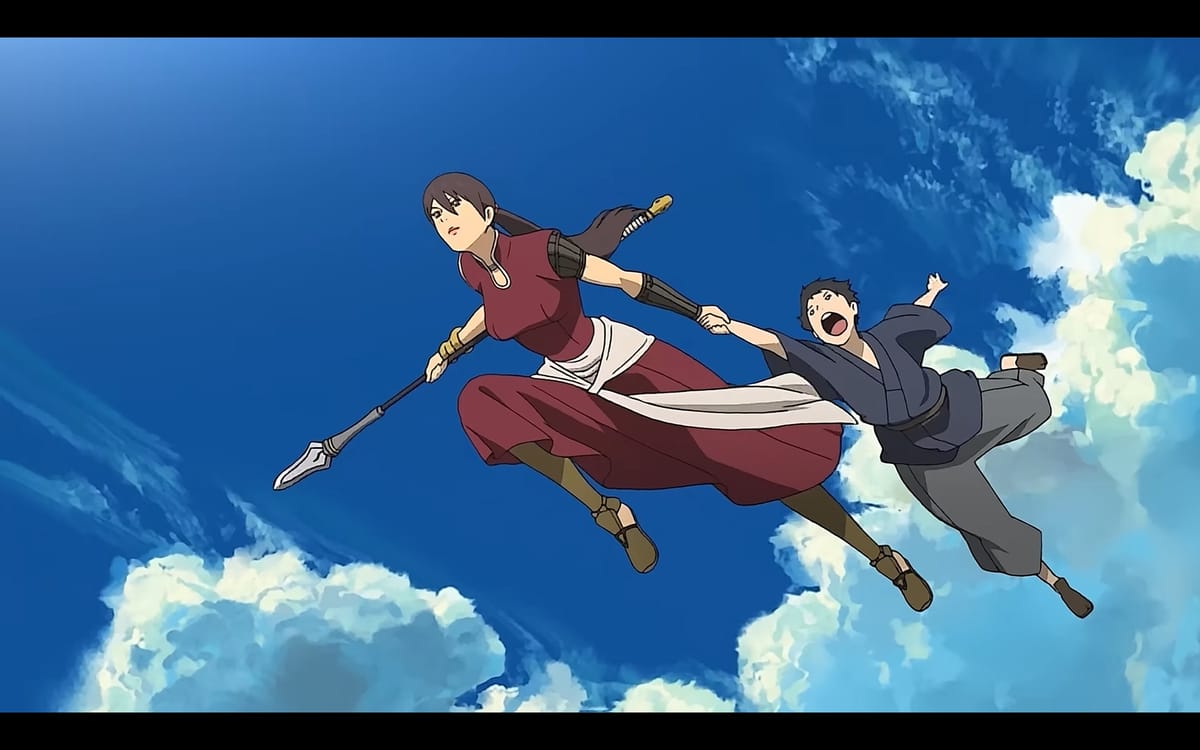
Moribito is the story of Balsa, a spearwoman from the land of Kanbal. For reasons that we don’t learn right away, Balsa has devoted herself to saving the lives of eight other people during her lifetime. She is therefore very reluctant to kill; she could dismantle everybody she comes across, but she chooses not to, since every life taken sets her back one in her tally. Unfortunately, her opponents don’t feel the same way, so Balsa enters every battle with a serious disadvantage.
If that makes you think, “Wow, Balsa sounds like a badass,” you’d be right. Every other character we meet in the series adores her, respects her or fears her. Unlike most anime protagonists, though, who are born into great power or work to achieve it in their youth, Balsa is a woman in her 30s who has already experienced a lot. It’s not just that she can handle almost anything, but that she knows how much she can handle and what to do when she’s in over her head. I know folks who watched Moribito just for Balsa and it’s not hard to see why. She stands apart even from comparable characters like Major Kusanagi in Kamiyama’s earlier anime Stand Alone Complex.
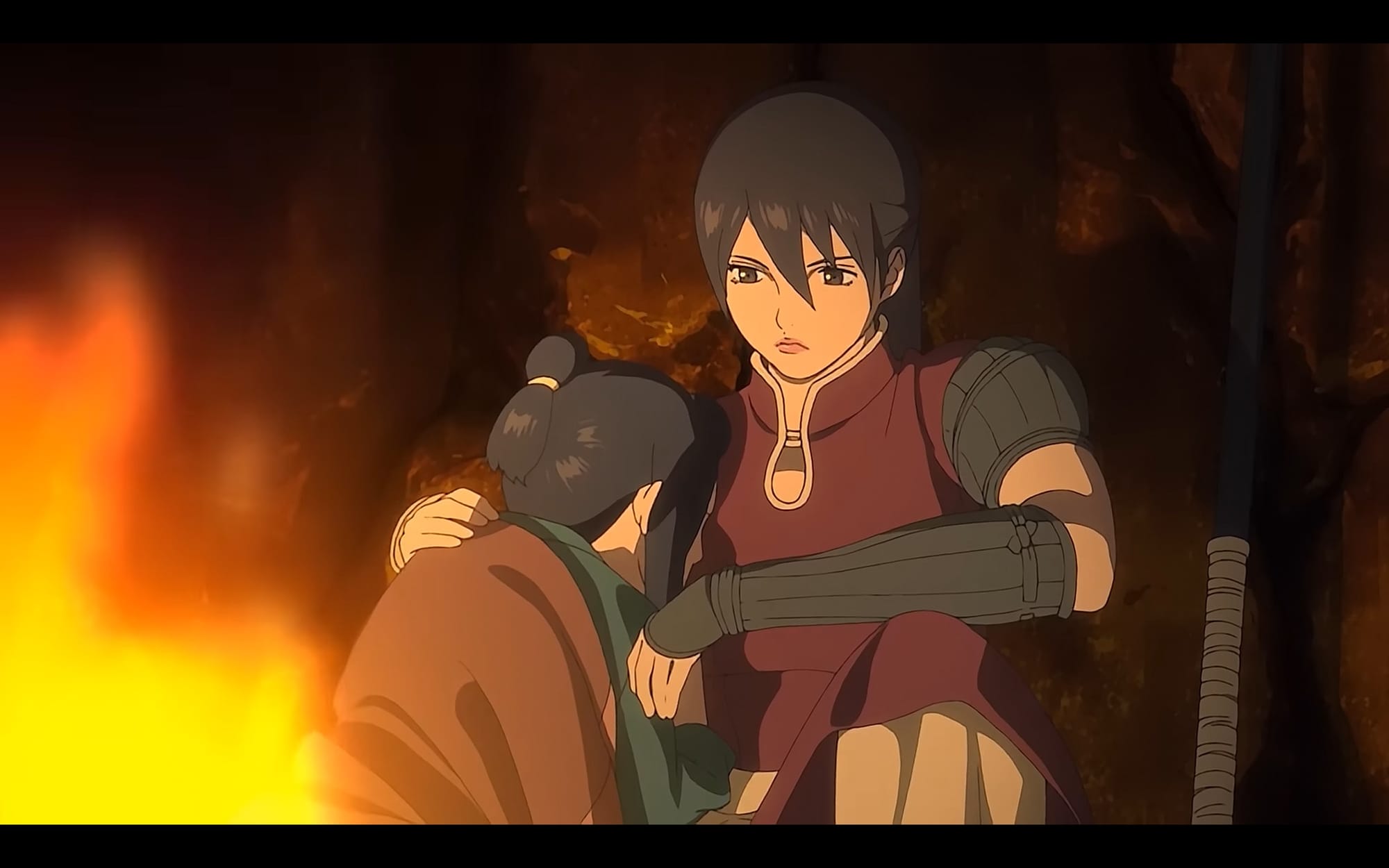
With that said, the plot of Moribito kicks into gear with Balsa doing what she does best–saving somebody’s life. Her act of selflessness comes with complications. The boy she saved was Chagum, the second prince of Shin Yogo. Chagum is host to a mysterious water spirit. The government of Shin Yogo is convinced this spirit is a “demon,” and they are so scared by what it represents that they will kill Chagum to eliminate it. Chagum’s mother, therefore, hands her son to Balsa in secret and requests that she protect him as long as he lives.
Balsa and Chagum later discover that the water spirit is essential to the health of Shin Yogo. To protect it (as a “guardian of the spirit,” say) is to protect the country. Yet the water spirit’s life cycle seemingly requires that Chagum be sacrificed. Meanwhile, hunters from the palace seek to retrieve Chagum and kill Balsa. How can Balsa protect Chagum when his family, his government and even nature itself want to imprison or even destroy him?

Moribito is very different from other, “traditional” fantasies I’ve read, in a good way. Balsa’s greatest challenge isn’t saving the world but instead keeping one child safe. Chagum’s enemies, meanwhile, are strong, smart and efficient. Every move they make puts Balsa on the back foot, requiring that Balsa uses every trick she has to keep Chagum safe. As a result there is very little pontificating in this series. Just reaction and counteraction, so tightly wound that one small mistake could ruin everything.
The third episode in particular is a great example of this. Balsa goes up against hunters sent by Shin Yogo, and despite her skill as a fighter she nearly dies. The battle is depicted with detailed choreography that is more like what you’d see from a film than from an anime series. It is also a distinctly ugly fight, with the combatants experiencing discomfort and harm that looks and feels real to the audience. Moribito never manages a battle like that again, but it still maintains a plausible sense of excitement and danger for at least 19 episodes.
There’s just one problem: Moribito is 26 episodes, not 19 episodes. About halfway through the show’s first cours, it slams the brakes for seven episodes in which Balsa and Chagum settle into life in the countryside. These episodes are much slower, which isn’t necessarily a bad thing. The problem is that they lack the appealing reaction/counterreaction dynamic you see from the rest of the series. Balsa is no longer capable of surprising you during this section; instead she always does whatever the premise of an episode requires from her.
I think this is why some folks I’ve met aren’t too fond of Moribito. It’s not that the action-packed third episode sets a bad impression. It’s that the texture of the series changes completely for a quarter of the episode count, right after the viewer is already settled in. The series then has to work to regain its momentum once the second half begins. Part of me wishes that the Moribito adaptation was shorter, or at least expanded on the source material across its whole length rather than grouping most of the “stand-alone” episodes in the first half.
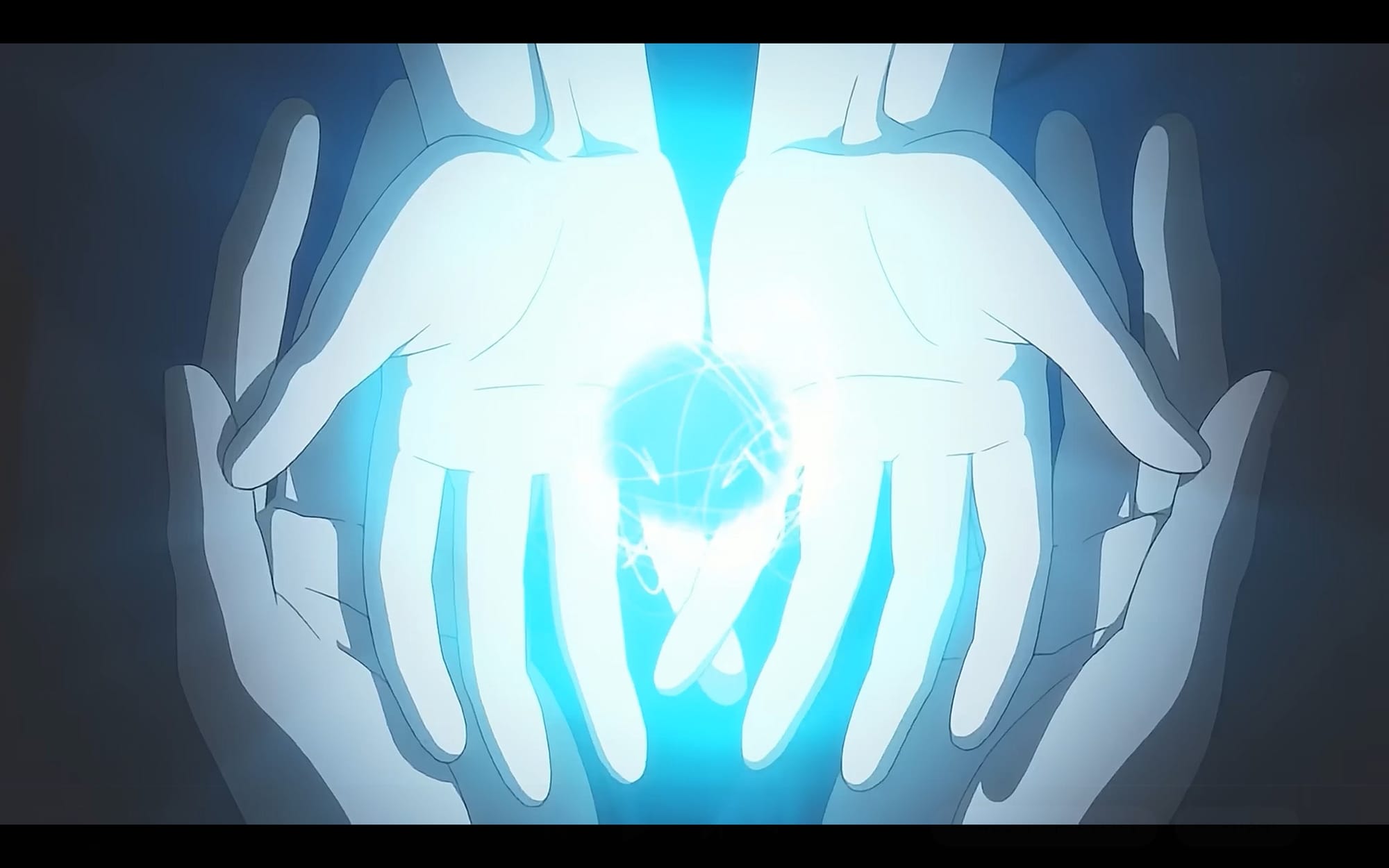
As I kept watching Moribito, though, I came to understand why Kamiyama and his staff made that choice. The core of the series after all is the cycle of nature. Just as Chagum grows from a child to a young man as the story continues, the being inside of him matures to the point where it can embark on its own journey of death and rebirth. The supernatural violence of this transition is perfectly natural; the real threat is what happens when people forget how and why it works.
These seven “slow” episodes therefore play a key role in marking time. Small details like festivals, gambling tournaments and the presence of other countries help ground the viewer in the world of Moribito. They also foreshadow later developments, like how the eleventh episode connects flowers with the supernatural–a relationship that pays off in the show’s climax.

The second half of the series further emphasizes the passage of time. Balsa, Chagum and their allies spend the winter in a hideaway called Hunter’s Hole. This section of the narrative is very important for Chagum, who visibly matures here as he builds stamina while training with Balsa. Yet most of this happens via montage. The primary motivator of change in this sequence is time and nature rather than any one character or event.
During this section, a theme from the soundtrack is given lyrics for the first time. It appears to be a rice planting song, exhorting the listener to not “let the paddies dry out. Call for water! Nurture the seedlings and spread the fertilizer!” Chagum’s adolescence overlaps with the transformation of winter to spring and the slow rhythm of annual labor. Yet the song’s chorus, which calls “Nahji, fly, fly,” reveals its true nature: a set of instructions to aid the water spirit’s rebirth, preserved in ritual and song even as all other information has either vanished from memory or been buried by an uncaring imperial power.
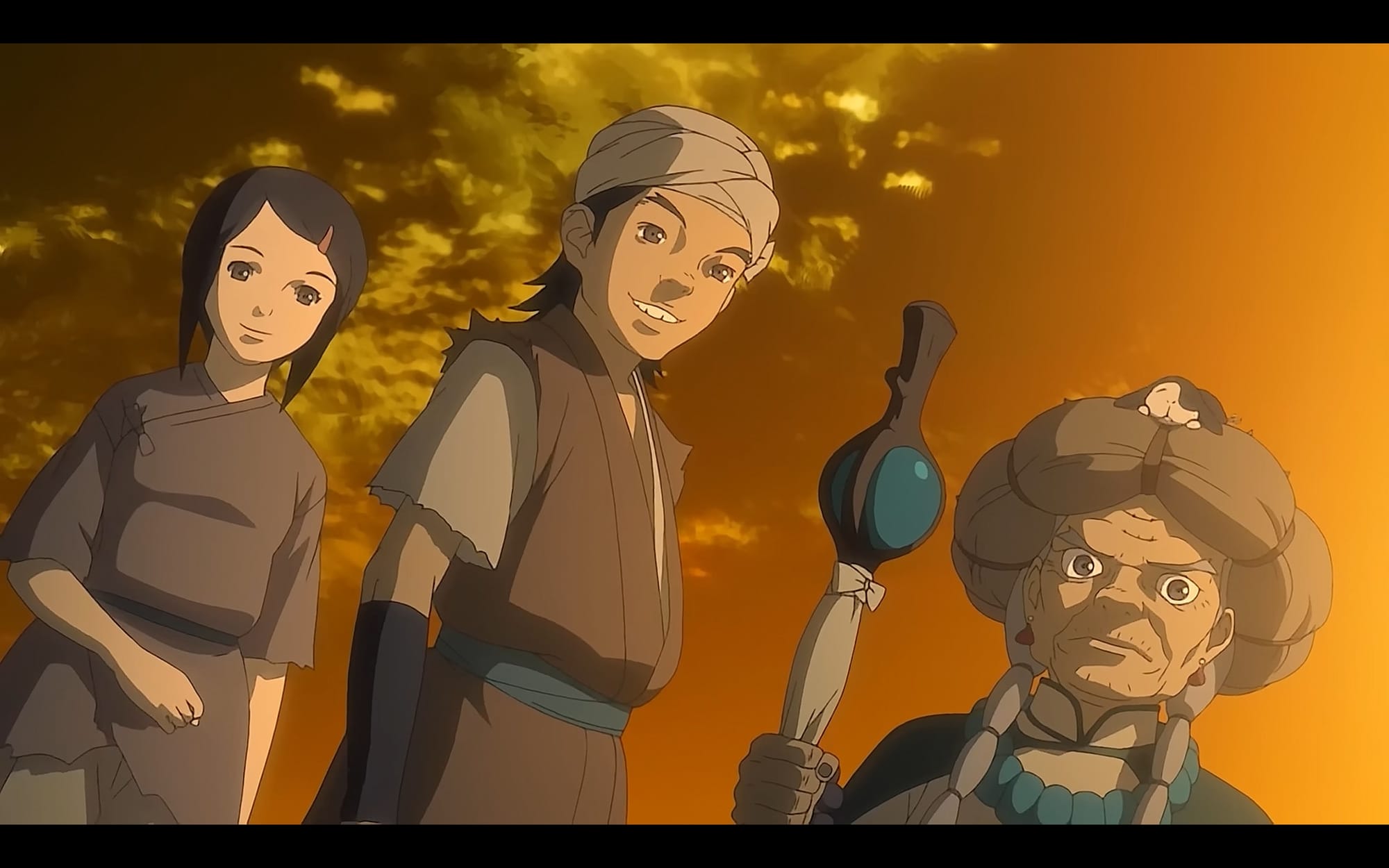
At the very end of the series, as Chagum births the water spirit from his chest, Balsa and her friends look to the horizon. Will the Nahji bird come for the egg, as the song says? Or has the passage of the years broken the cycle that once ensured Shin Yogo’s survival? They shouldn’t have worried. In the sky, white birds appear. One of them splits from the flock and comes, as if fated, for the egg. That’s what Moribito: Guardian of the Spirit is about. The slow, inevitable passage of the seasons, in all its immensity.
AMV of the Week
Here's "City the Animation Experience" by Mino Yamamoto.