Let's Go! Anime in 2025
Against all odds in 2025, anime is real!
2025 was a big year for anime. Demon Slayer: Infinity Castle became the highest grossing Japanese film of all time. The anime adaptation of My Hero Academia finally wrapped up, nine years after its premiere. A short animation of Chainsaw Man heroine Reze dancing blew up on X. Outside of adaptations, there were even some great original anime, like Apocalypse Hotel and Maebashi Witches. khara also delivered Gundam’s first alternate history story set in the Universal Century with Mobile Suit Gundam GQuuuuuuX.
This is the closest that anime has ever been in my life to being mainstream. Kids and adults are watching it. Artists are inspired by it; two of this year’s biggest films, Ne Zha 2 and K-Pop Demon Hunters, bear the medium’s influence. If some in the media don’t understand it, they at least recognize how popular it is.
As for me, I have mixed feelings. What drew me to anime in the first place were the stories that I couldn’t find anywhere else. These were weirdo projects like Masaaki Yuasa’s melancholy science fiction series Kaiba, or Mitsuo Iso’s cyberpunk fairy tale Dennou Coil. As anime has become more and more popular, I’ve had to reckon with the fact that most viewers don’t really care about those shows. What they want is more anime adapted from the pages of Shonen Jump, or from webnovels like Solo Leveling. That’s what people mean when they say that this was “the year anime came out on top.”
As a friend of mine once said to me, though, for every nine people chasing the next big thing, there will be one person who will stick around to dig deeper. That means the bigger the crowd, the more fellow weirdos we’ll have. Here are some moments that stood out to me from recent productions this year carefully curated for those weirdos. Against all odds, anime is real!
Mobile Suit Gundam GQuuuuuuX
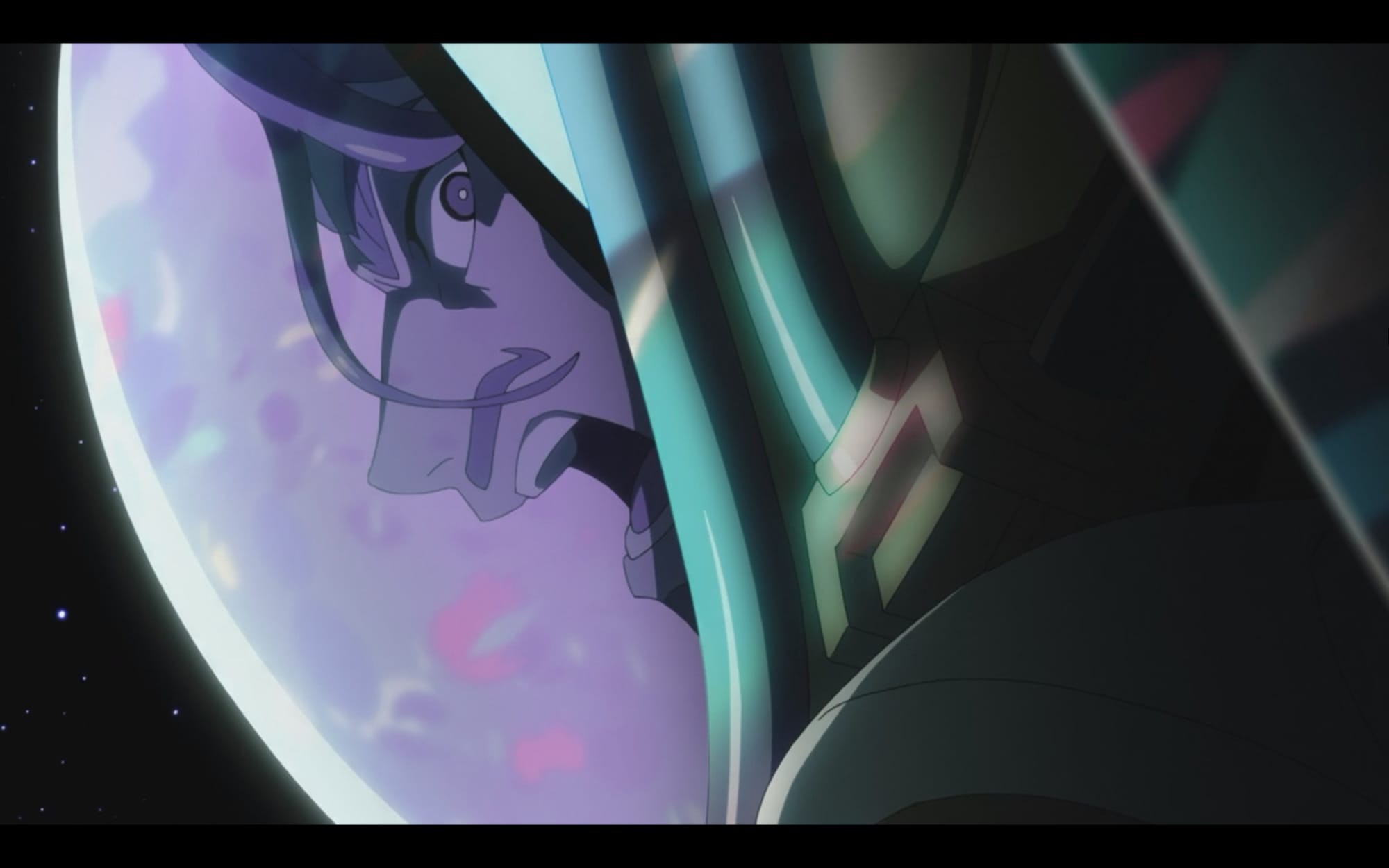
Director Kazuya Tsurumaki has always been about celebrating the losers, and that’s never been more true than in this year’s Mobile Suit Gundam GQuuuuuuX. Set in an alternate history Universal Century where Char stepped into the Gundam’s cockpit before Amuro, it shines a spotlight on characters previously ignored by established canon. Diplomatic failson Cameron Bloom is an influential presidential aide. Zeon scion Kycilia Zabi plots to seize control of the narrative for herself. Then there’s Challia Bull, a one-off chump from the original series transformed here into GQuuuuuuX’s signature character.
Before Char unexpectedly vanished from the world of GQuuuuuuX, Bull was his confidant. Now he chases the spectre of the Red Comet. At first I couldn’t figure out his deal. Would he be a villain, like so many other untrustworthy adults in series with scripts written by Yoji Enokido? The very end of the series, though, proves him to be a hero. Not only was he collaborating with Char’s sister Artesia behind the scenes, but he’s more than capable of matching his former idol in a one-on-one robot duel.
GQuuuuuuX asks the question: “what is the past, present and future of Gundam?” The series punts on the future, and (despite its best efforts) isn’t always up to confronting the sins of the past. Where it is most successful is in scenes like Chalia Bull demanding better of Char, and in the process usurping his role in the narrative. Just what you’d hope for from the Red Comet’s number one fan.
Zenshu
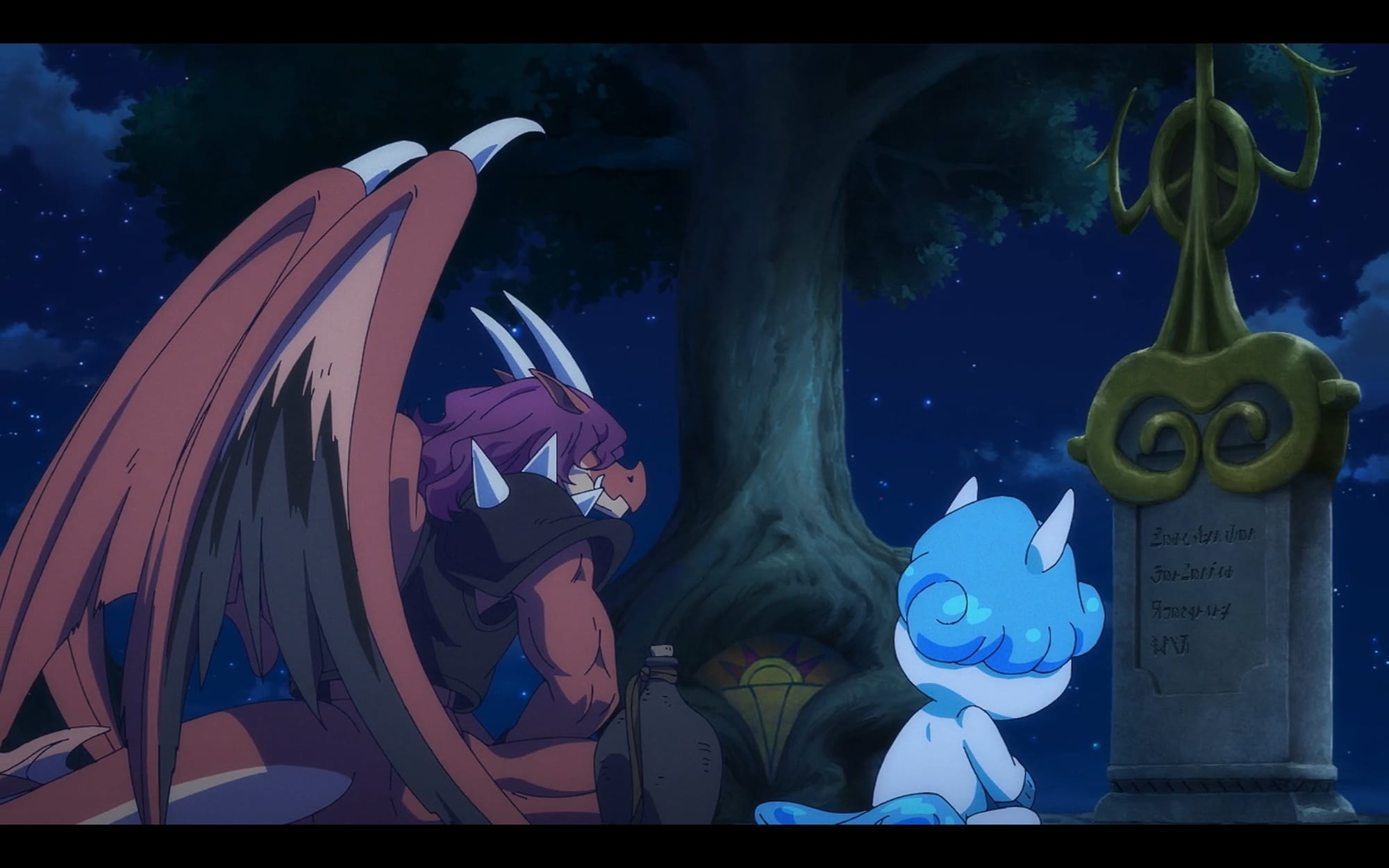
My favorite moment in Zenshu is an innocuous conversation between Unio and Justice after a series of terrible events. Unio is a rude cartoon unicorn; Justice is a big dragon. When Justice asks Unio how he’s doing, Unio can only think about his friend Luke. He talks about how Luke is doing badly these days; maybe even worse than he was in the thick of the battle against the Voids when he lost all his friends. To which Justice responds, “I’m talking about you, Unio. Are you all right? Nobody’s okay when they lose a friend.”
Even though the protagonist of Zenshu is an animator, I don’t think the series actually has much to say about artists or their relationship with art. What Zenshu is exceptional at, though, is landing these intimate scenes between characters that read as in-universe fanfiction. You can almost imagine the kinds of folks who, if Unio and Justice’s world was an actual fictional work, would spend their time writing hurt/comfort scenes between the two of them. So maybe Zenshu and, say, Mobile Suit Gundam GQuuuuuuX, aren’t so different after all…
Maebashi Witches
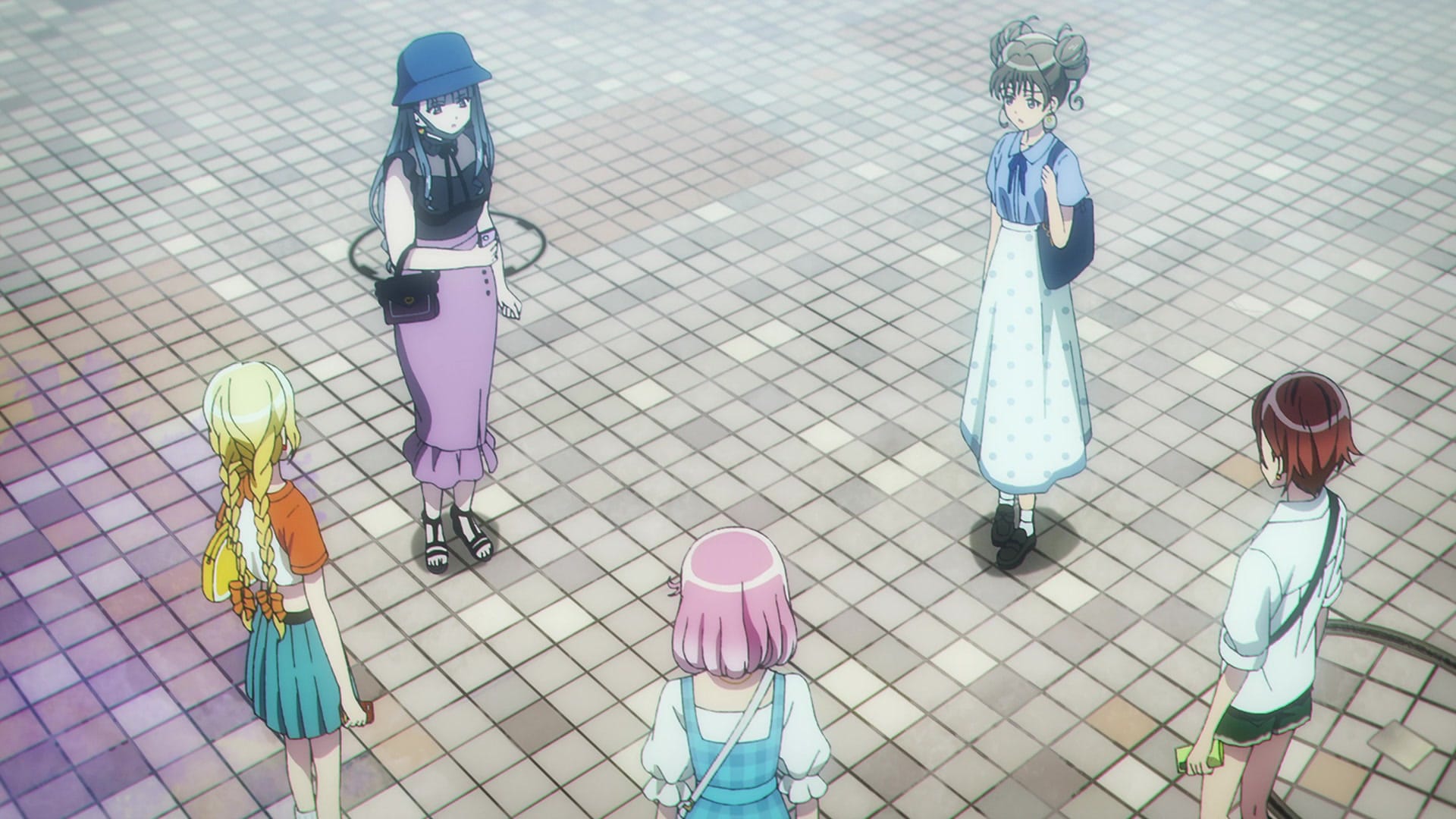
Maebashi Witches is all about a squad of girls who inspire locals with their songs. Unfortunately, one of their customers betrays them, stealing their magic shop and kicking them out into the real world. Now they only have a short time to find their way back before their memories of magic (and each other) disappear. As Yuina and her friends search the city for a hidden door, they cycle through the stages of grief: mistaking a shutter for a magic portal, panicking over time running out, giving up early just to see each other one last time, and then frantically calling out their feelings over the phone when even that seems unlikely.
By the time the five find each other in the middle of the city, time has run out, and all of them really have lost their memories. They walk past each other into the night. Cut to the ending credits, in which our girls have vanished. This is Maebashi Witches at its most cruel; a series that for all its earnestness and progressive messaging will happily push you off a cliff at the end of an episode. Try holding onto the edge and it will stomp on your fingers and laugh.
New Panty & Stocking with Garterbelt
For all its rude humor and pop culture references, the pleasure of Panty & Stocking has always been not knowing what you were going to get every week. The original series could give you a story in which Panty & Stocking fight a poop monster. Or it could give you "Vomiting Point," about a down-on-his-luck salaryman just trying to get by in a neighboring city. Judging New Panty & Stocking, then, isn’t so much about consistency as it is the highs and the lows. What could Imaishi and his new crew of young animators show us that he couldn’t the first time?
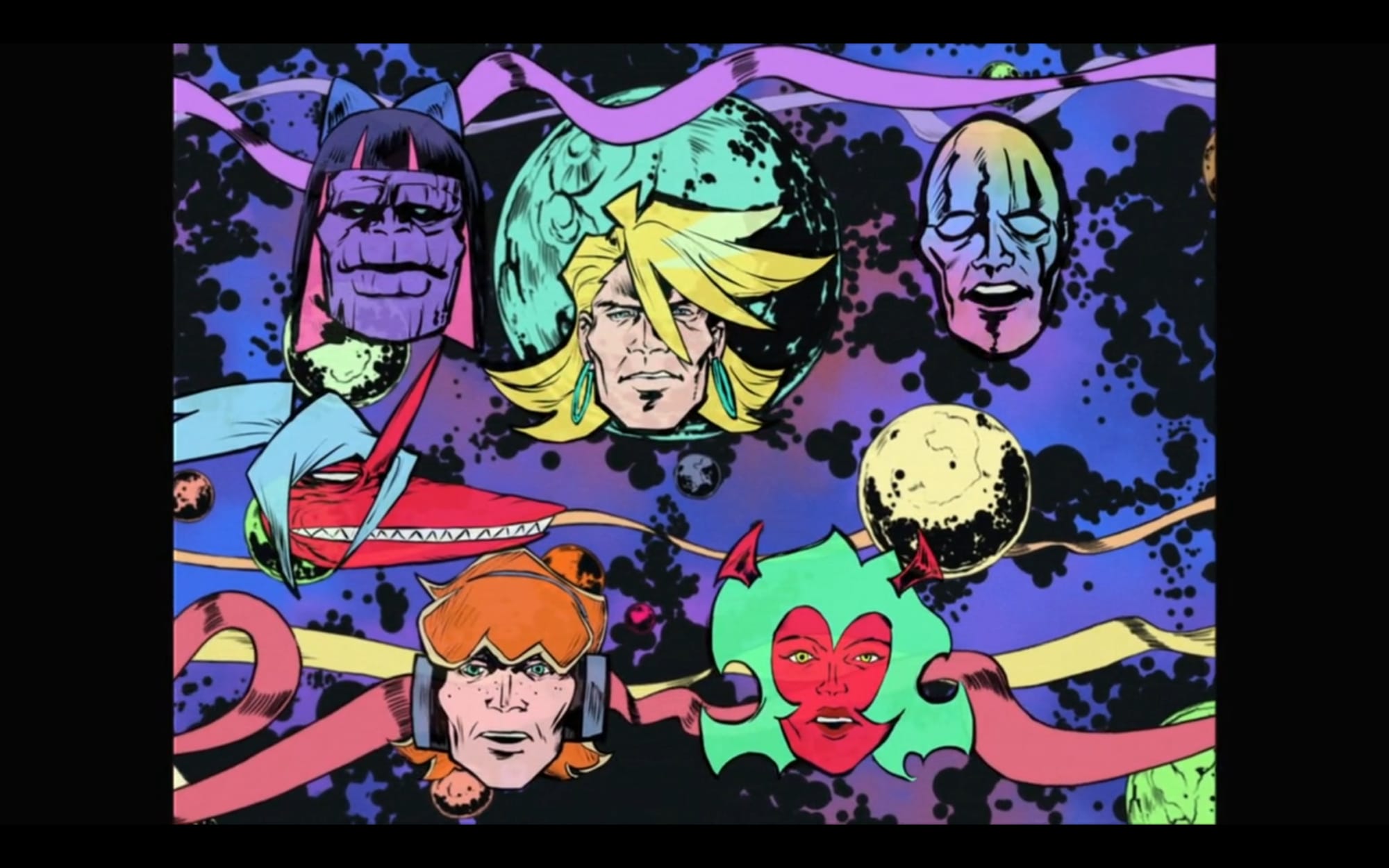
An early highlight, and one of my favorite Panty & Stocking segments ever, is “Shoot for Yesterday!” It starts with a mysterious cowboy transforming the cast into funny-looking Hanna Barbara cartoons. That’s already a good bit, since watching Brief do the Scooby Doo Run is funny in and of itself. Once that part’s over, though, “Shoot for Yesterday!” switches gears into a black-inked, perspective-changing Jack Kirby riff where our heroes battle cosmic gods to save their world from “New-Gaddification.” It’s a specific flavor of nerdery that was nowhere to be seen in the original Panty & Stocking.
At Anime NYC, Imaishi said that while he “personally wanted to do it myself,” he ended up entrusting “Shoot for Yesterday!” to animator Kai Ikarashi. This was the right call; Ikarashi’s shifting aspect ratios and use of left to right “flat” compositions is more radical than Imaishi’s own work has been in a long time. The resulting segment is proof that Trigger’s young animators aren’t satisfied playing the hits. Their best work takes Panty & Stocking to places that even the first season never touched.
To Be Hero X
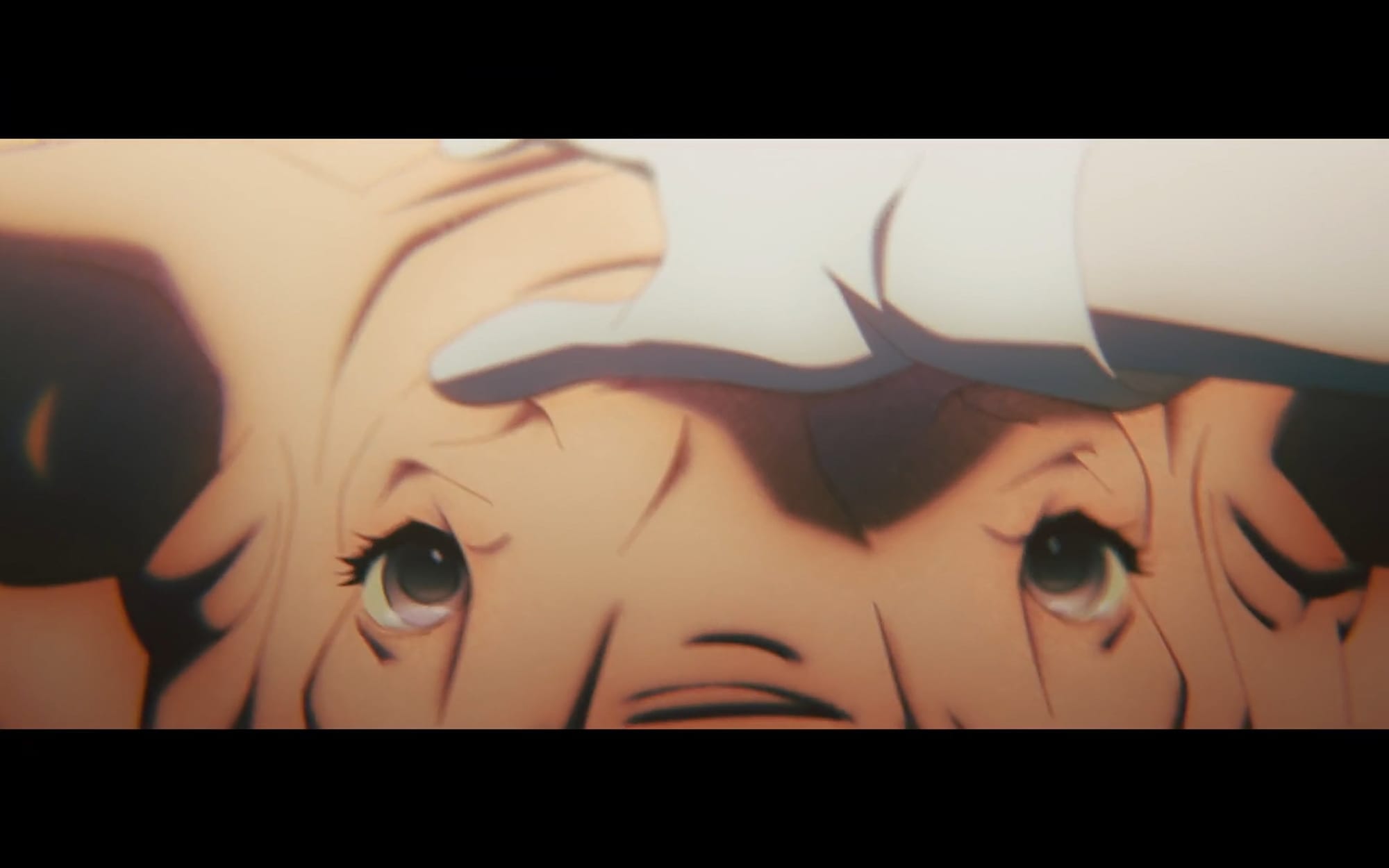
Ghostblade is a bad dad and a parent-killing assassin. By all accounts I should hate him. So why, then, is he one of my favorite characters in the Chinese and Japanese co-production To Be Hero X? It’s because the series does such a good job putting you in his perspective. Ghostblade perceives the world as noise–harsh laughing, squealing pigs, a kind of visceral ugliness resounding through everyone and everything. All he wants is to be left alone. Yet he can’t help forming connections with people anyway. While other heroes in this series like Nice or E-Soul betray those connections to achieve their goals, it’s Ghostblade who stays true to his friends and family no matter what.
Ghostblade’s arc is also one of the few in To Be Hero X that lives up to the show’s potential as an anthology. Other than the early arcs, which combine 2D and 3D animation, the rest of the series is static in delivery. It’s tough to distinguish Lucky Cyan’s perspective from, say, Queen’s perspective, since they share the same look and feel. Ghostblade’s narrative though is claustrophobic from start to finish. You don't need to hear anything Ghostblade "says" to know how he feels. Seeing the world through his eyes is enough.
City the Animation
Save for an unusual “previously on” section at the very start, the first half of City the Animation’s fifth episode is typical for the show. Which is to say, it’s absurd. Nagumo is kidnapped and taken to a mansion animated via luxurious stop motion. There she must brave countless trials. If she fails, she and her fellow prisoners will be subjected to…the ultimate in hospitality?! How will they survive?
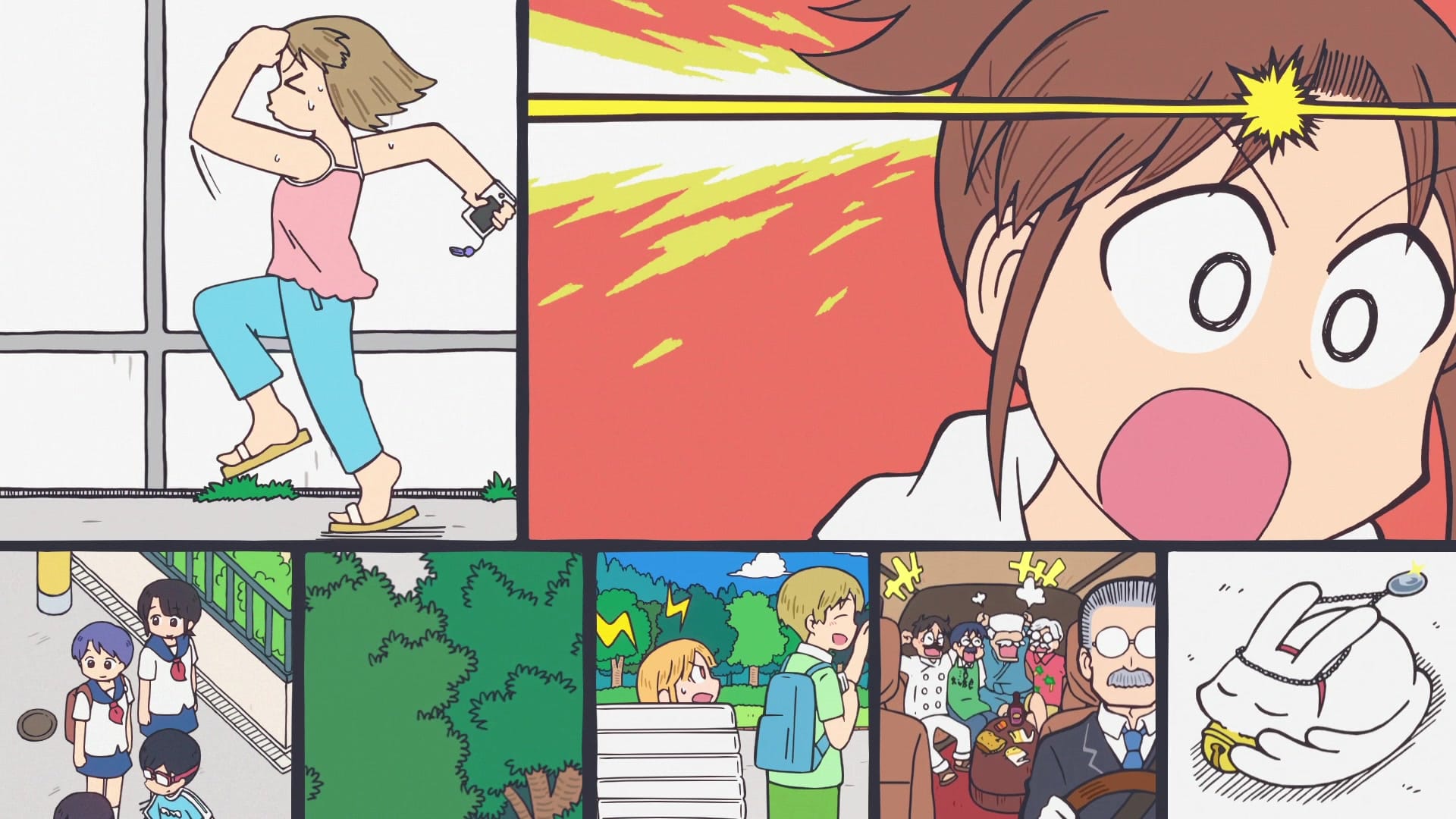
That’s just how it starts, though. The second half of the episode abruptly splits the screen. Nagumo’s friend Niikura runs after her pendant on the left side. Nagumo and her RPG party descend through the dungeon on the right. It’s easy enough to follow at first, but then the right side starts deploying note-perfect random encounter gags, and the left side becomes increasingly cluttered. All of a sudden the right side turns into real deal animation playing concurrently with the left side. It switches to the top. Then the screen splits again, this time into four distinct panels. Then five panels. Four panels! Five panels. Six panels. Seven panels. Eight panels…
If you’re a fan of animation, you know just how bonkers this sequence is. Multiple panels require extra drawings. Some of them are loops, but others contain plenty of non-repeated material. The quality of the animation itself also remains consistent, meaning that each panel may as well be its own self-contained segment of City the Animation. Then there’s the final sequence, which asks, “how do you animate a giant Sunday style comic strip? With infinite panels, obviously!”
Of course, City the Animation isn’t just special just because it’s a technical achievement. It’s special because the technical achievement reinforces the material. Just like in any other episode, the creative team takes a gag (splitscreens) and stretches it beyond the point of absurdity. It just keeps going, and going, and becoming increasingly complicated until you scream every time panels merge or split or even seemingly reference each other.
Aside from all that, there’s a simple enough reason for why City the Animation would break new ground in anime history like this. The series is based on a comic book. Comic books have panels. So if the series already goes to such lengths to emulate the style and physics of a comic, why not go all the way? The result speaks for itself. Legendary stuff.
100 Meters
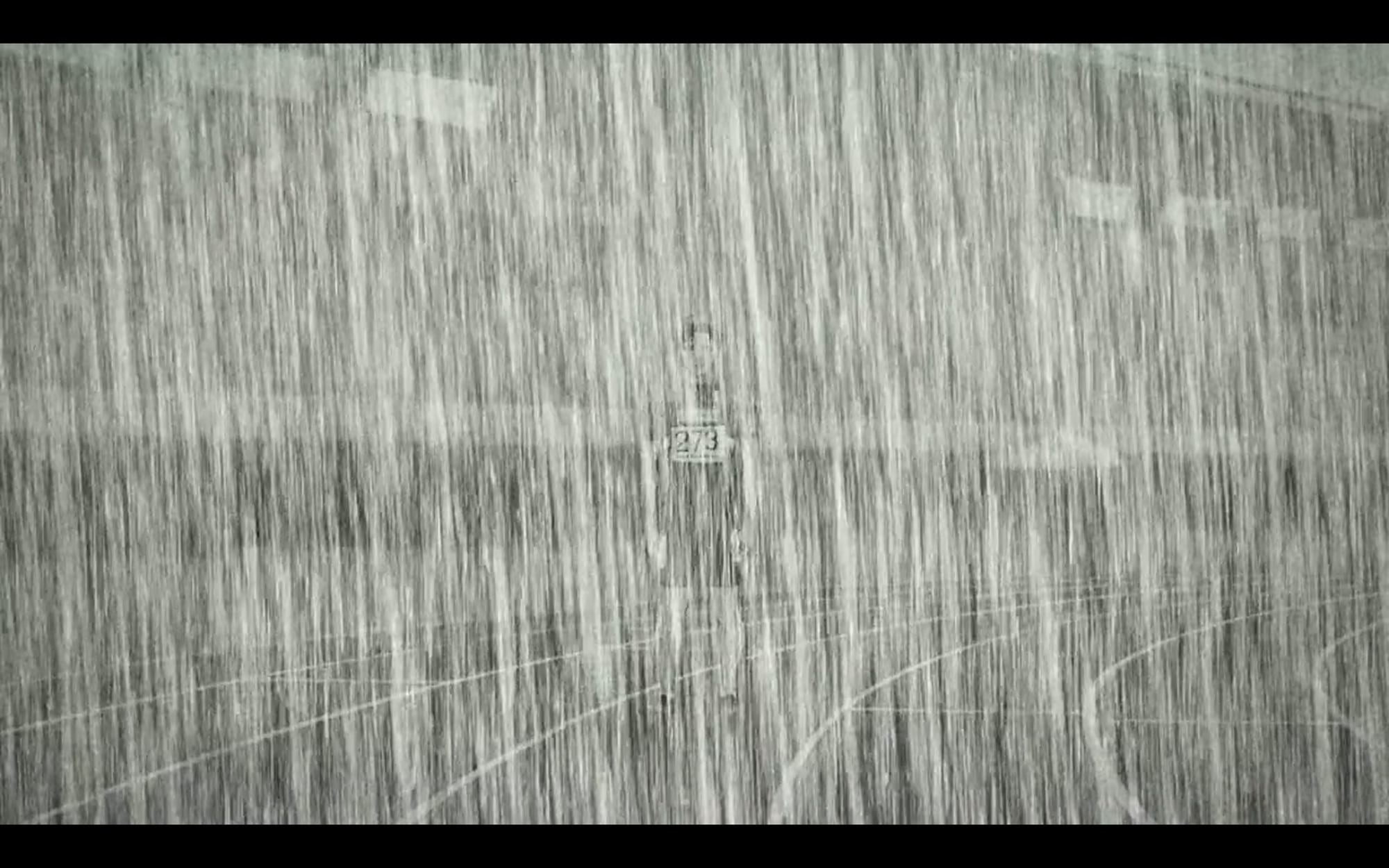
Sports anime are all about the process. Not just winning the race, but every thought that goes through your mind and puts you in the position to win the race. The best sequence in 100 Meters, though, is all about what happens before the race. Runners Togashi and Komiya prepare to compete against each other for the first time since they were kids. They walk to the starting line with their fellow competitors as rain falls in the stadium. As they take their positions and do stretching exercises, the camera pans to reveal photographers and a handful of dedicated spectators. Each runner introduces themselves one by one, waving slowly for the audience. Seconds tick by, minutes tick by, time stands still, a single drop falls from a follicle of hair. A small eternity en route to fulfillment and failure, captured (mostly) in a single “take,” before the rain swallows everything.
Anyone who’s run a race before knows how it feels before the starting gun. As you prepare to subject your body to excruciating pain, your heart falls into your stomach; time ebbs and flows. You feel a sick and delirious anticipation for what’s about to happen. 100 Meters captures this feeling better than any other film I’ve seen. It’s the perfect combination of manga artist Uoto and director Kenji Iwaisawa’s distinct strengths: the way that Uoto gets into the head of ambitious and driven people, and the way that Iwaisawa depicts exaggerated yet strangely lifelike characters via rotoscope. The rest of the film has its moments but never gets any better than this.
My Melody & Kuromi
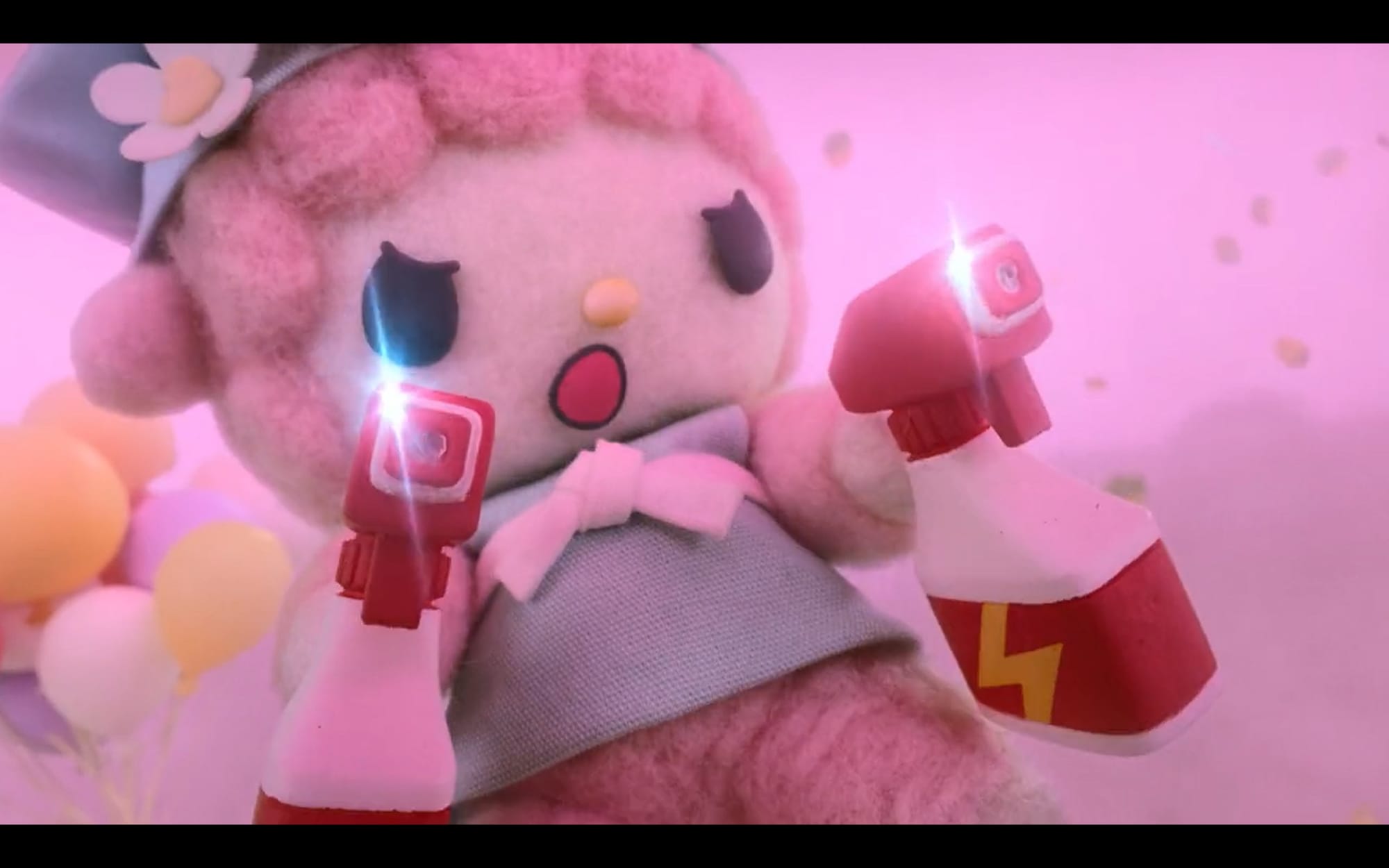
My Melody & Kuromi is a cute and charming story about two Sanrio mascots competing over who can bake the best sweets. It’s also a surprisingly gruesome horror story in which the wonderful world of Mariland is corrupted by magical sugar. Finally, it’s an excuse for director Tomoki Misato to show off his love of Hollywood action films. That’s how you get the final confrontation, in which previously non-vocal mascot sheep Piano breaks out the cleaning spray to protect her friend’s airship from aggressive bat cookies infected by mold. “If I explained everything using words,” she says while dual-wielding spray guns, “I feel like that would be the end of it.”
These days I’m pessimistic about big budget franchise entertainment. Everything is so expensive and risk-averse now that the windows that once allowed folks like Ryan Coogler or Nate Stevenson to make neat popular art just aren’t open anymore. My Melody & Kuromi though gives me hope. It’s such a selfish film in how it uses the cutesy framework of Sanrio as scaffolding for the team’s own preoccupations. It will make you love Melody and Kuromi, but it will also make you ask: “if you could eat a giant fluffy cat made of clouds, what would it taste like?”
Apocalypse Hotel
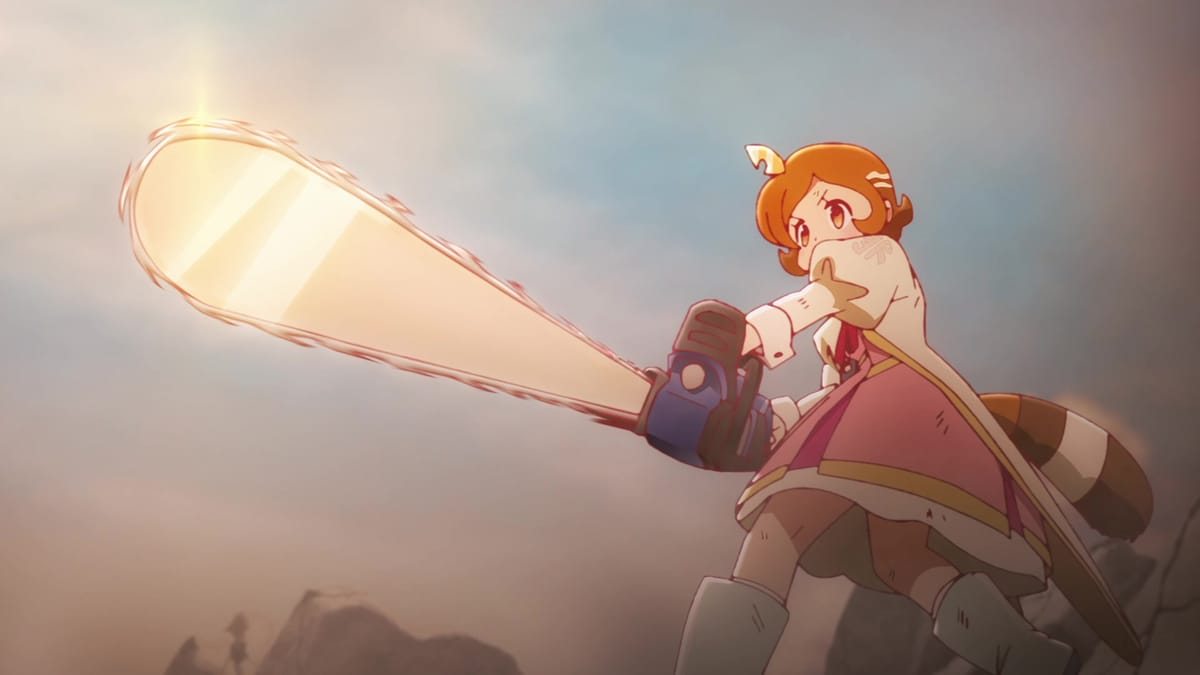
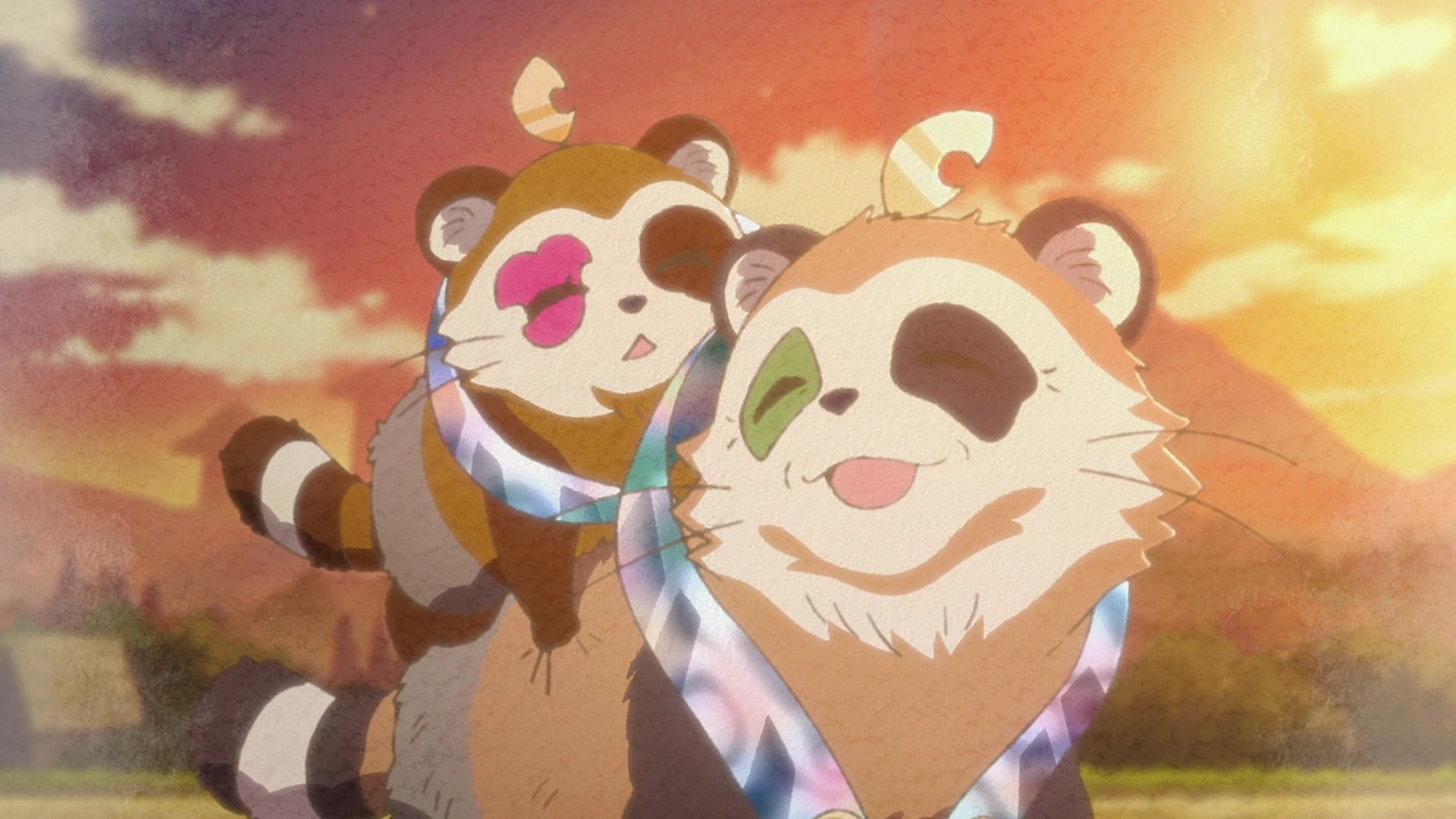
The ninth episode of Apocalypse Hotel is a story about a wedding. It is also a story about a funeral. Tanuki alien Ponko and her partner Ponstin want to get married, but then Ponko’s grandmother Mujina dies. What to do? Hotelier robot Yachiyo makes a radical suggestion: hold a wedding and a funeral at the same time. Cut to Ponko and Ponstin walking down the aisle, followed by Mujina’s mounted corpse.
Apocalypse Hotel takes wild swings like this all the time. They don’t land for everybody; when I saw this episode with my anime club, they seemed pretty befuddled by it. Who would ever be stupid enough to hold a wedding and a funeral simultaneously? Isn’t that in bad taste? Perhaps. But as we learn, Mujina was never the type to hold her loved ones back. There’s only so much time in life after all. Ponko and her family fought hard to escape their collapsing planet. Now, on Earth, they will live on their own terms.
Together, Ponko and the wedding guests sing along to a song that Mujina once sung to Ponko when she was just a child on their home planet.
Spread your palms wide
and drum your belly
Who out there will this melody reach?
One pon-poku
two pon-pokus
running through the rocks and the grass…
The guests raise paper lanterns to the sky. It has been hundreds of years since Ponko’s family arrived on Earth. Their old home a faded memory. Yet, in this moment, it is painfully vivid.
May our belly drums ring far and ride
All the way to the skies, though they may be distant now.
AMV of the Week
Here's "It's Okay to Let the Train Pass" by SQ.