LET'S ROCK 3! My Favorite Opening and Ending Credits of 2025
A banner year for opening credits sequences in anime.
Once again, it’s time for my regular round-up of favorite opening and ending credits of 2025! While memorable ending credits sequences were thin on the ground this year, the opening credits were some of the best and most creative of the past decade or so. I’m glad that animators have the opportunity to keep experimenting with these even as anime production becomes increasingly risk-averse.
Best Mystery: “Hyakka Ryouran” by Lilas Ikuta
The Apothecary Diaries Season 2
One of my favorite bits in opening credits are the little hints for future events. It’s best when you have an original series so that you have no idea what the little clues refer to. But an adaptation can be fun, too, because then fans of the source material have the privilege of recognizing what the staff is up to long before the anime-only viewers do. It’s a promise from the staff saying, “don’t worry, we got you.”
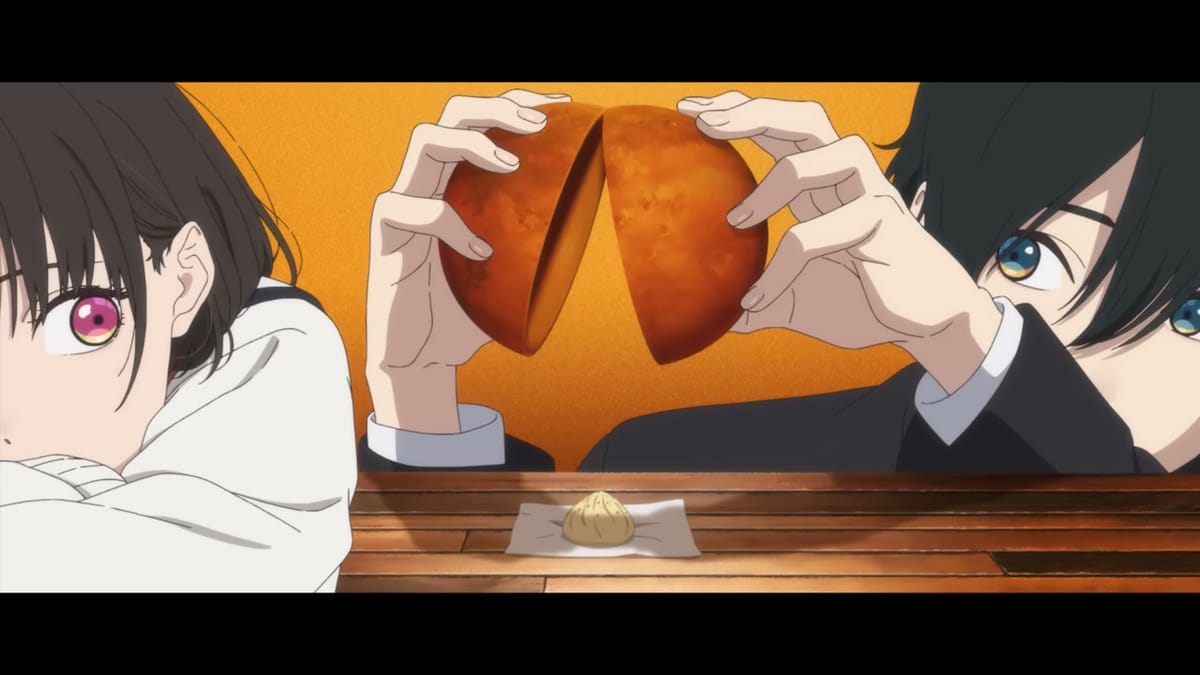
The opening credits of The Apothecary Diaries’ second season throws down the gauntlet with not just one but ten different significant objects introduced in a single blink-it-or-miss-it frame. One of them in particular (the frog) is carefully calibrated to drive fans of the source material crazy. I love this kind of thing, especially since The Apothecary Diaries is a detective series. Leaving clues for the intrepid viewer to piece together themselves (or planting a suggestion to make the solution that much more satisfying when it comes together) is classic stuff.
As for the rest of the sequence? Well, I can take or leave the song, but there’s plenty of evocative and mysterious imagery: fabrics, flowers, doors. The penultimate shots of soaked Maomao and Jinshi are perfectly calibrated as well.
Most Naoko Yamada: “Yokan” by tota
Anne Shirley
Anne Shirley had big boots to fill. Its predecessor, Isao Takahata’s adaptation of Anne of Green Gables, is one of the most beloved anime series ever made. Why try and recreate that magic when you could instead make something new? Well I'm not sure if Anne Shirley provides a novel answer to that question, it does benefit from somebody that even Isao Takahata didn’t have access to back in the day: director Naoko Yamada, who directed and boarded both the OP and ED for this series.
The opening credits in particular has everything I’ve come to expect from Yamada and then some. The feet are there, the flowers are there. There’s close attention to characterization through movement: Anne skips through the kitchen, lingers in the snowy woods, and proudly marches past her friends only to pause and dance with Gilbert Blythe and Diana Barry.
What I love in particular though are the goofy details that I’m not always used to seeing from Yamada. For instance, the bit in the woods where little white ferrets stick up their heads in time to the music. Or how the credits sequence ends with an iris cut in the shape of Anne’s hat. These do a lot to sell Anne’s lively personality, and set this new adaptation aside from Takahata’s legendary 1979 rendition.
Most Megumi Ishitani: “Watch me!” by YOASOBI
Witch Watch
Megumi Ishitani’s built a reputation over the years as being the single most beloved director currently working on the One Piece anime. Every one of her episodes is an event. So I was surprised to see her appear on an entirely different Shonen Jump series, Witch Watch! Apparently Ishitani is a big fan, though, so having her pop up to do the opening credits makes perfect sense.
“Watch me!” shares a lot in common with last year’s “Uuuuus,” arguably the greatest One Piece opening credits sequence ever. Ishitani though is never satisfied just running through a list of credits sequence cliches, or even adapting the source to fit her preferred motifs and techniques. If anything, stylistic variety is her preferred technique. Splitscreen, fisheye and various color and lighting schemes are deployed to keep the viewer on their toes. The overall impression is of a series where anything can happen at any time; it’s a perfect fit for Watch Watch’s brand of eccentric romantic comedy.
The beginning and ending of the sequence, though, sticks in your mind. What’s up with that burning house? It creates continuity, but also hints at something boiling under the surface of this otherwise cute and cuddly show.
Best Old-School: “BLADE” by BLUE ENCOUNT
Yaiba: Samurai Legend
“BLADE” checks off every single boy's action anime opening cliche there is. Introduce the hero, then his friends. The villain beats up the hero, he swears to train, so he travels all over the world and then goes back to fight the bad guy while his friends root for him from the sidelines. There’s red vs. blue color-coding, a zoom shot in which every minor bad guy gets a split second to make an impression, etc. etc.
The reason I dig this credits sequence is that it leans all the way in. “BLADE” flies by at the speed of sound, and yet packs in so many small details that you’re almost certain to miss something on the first watch. Storyboarder and director Ikuo Geso previously did last year’s frenetic Blue Archive credits sequence, and this one is nearly as hyperactive. Still, though, its familiarity gives it a nostalgic charm. It's everything you want from the classics blown up to the most absurd degree possible.
Most Chill Time: “Hello” by Furui Rihio
CITY the Animation
Most of the time, CITY the Animation is a fun and zany series about a bunch of oddballs crossing paths with each other in short skits. So I’m struck by how the opening credits slow things down to sit with charged, nostalgic images: a wet dress in summer, vibrating raindrops, a trio of shadows running up a hill. It ends on a dance performance but we only ever see the dancers from behind. Everything we need to know about the cast and setting is implied rather than directly stated.
The CITY opening credits are also a crash course in the show’s distinct style. Hatched shadows, thick black character outlines, cartoon animals and foliage…it’s a shift from the sense of realism that Kyoto Animation is known for, but the spirit is still there. There’s a quiet confidence to this sequence that impresses me more with every viewing.
The Creepy Nuts Award: “Mirage” by Creepy Nuts
Call of the Night 2
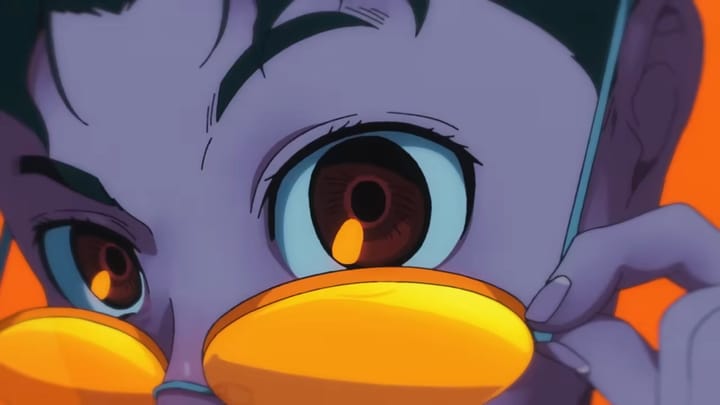
One of the coolest characters from the first season of Call of the Night was Anko, a mysterious older woman wearing a trenchcoat who is always smarter and more cynical than everybody else in the room. The second season of the series digs into her story, and so of course Anko is put front and center in the opening credits sequence. Forget Ko Yamori, the ostensible main character of Call of the Night. Anko’s the main character, now!
The credits sequence is set to another song by Creepy Nuts, who provided the first season’s ending theme back in 2022. Since then the duo blew up with their theme songs for Mashle: Magic and Muscles (“Bling-Bang-Bang-Born”) and Dandadan (“Otokonoke.”) Both of those songs played pretty frequently at Anime NYC this year, and it’s no surprise why; they’re dance tracks. “Mirage” is also a dance track, but it’s a slower burn, with a melancholy edge. I hope that Creepy Nuts keeps adjusting their signature sound rather than feeling as if they have to deliver “Bling-Bang-Bang-Born”s for the rest of their careers as musicians.
Best Performance: “skirt” by aiko
Apocalypse Hotel
The best opening credits sequences prepare you for the series that you are about to watch, and Apocalypse Hotel is no exception. Spotlight on Yachiyo, an android concierge, who descends the stairs of Ginza’s Gingarou Hotel. She dances in front of a seemingly empty fish tank while surrounded by total darkness. She is smiling, and yet her movements are mechanical; they do not match her smiling face.
Then, as she does a kick in the air, the lights turn on and a whole cadre of robots and tanuki aliens join in. Yachiyo will always be haunted by the long-gone population of earth. But so long as she has her staff and her guests, she can be happy. Yachiyo then does a full Disney princess spinning skirt camera rotation because the people who made Apocalypse Hotel love Disney and they love Hollywood.
The song “skirt” itself is interesting as well. You get a sense in the opening minute that aiko can’t hold the notes. But I think that is purposeful. This is a song from the perspective of a robot who has found meaning in routine. Just as Yachiyo’s movements change throughout from mechanical to lifelike, you can hear aiko’s voice warm up over time. While I’m not sure if I’d listen to this song on its own, it works very well as characterization.
Favorite Opening Credits of 2025: “Kaseijin” by Yorushika
Shoushimin Series 2
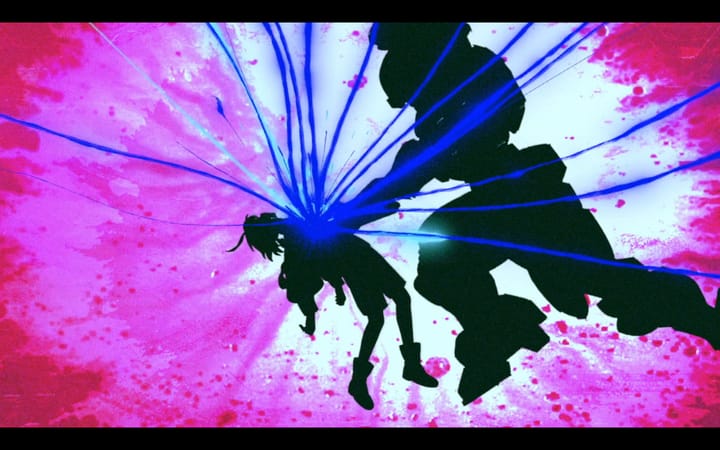
There’s something to be said for originality. Every frame of “Kaseijin” gives you something new and unexpected. Vibrating shapes in space, paper stop motion, paint, live action. Then you hit the last twenty-two seconds and are bombarded with some of the most striking images I’ve ever seen in an opening credits sequence. Even considering the heavy competition among other credits sequences this spring, this is a true all-timer, and probably the best thing I've seen from credits director Kyohei Ishiguro.
Since I’ve only seen a few episodes of Shoushimin, I’m not too familiar with the foreshadowing in this sequence. I do find it very funny, though, that despite the English title being “How to Become Ordinary,” none of the imagery in this opening sequence is ordinary at all. The protagonists Kobato and Osanai should rethink their approach next time!
Favorite Ending Credits of 2025: “Lazarus” by The Boo Radleys
Lazarus
Despite a great premise, well-choreographed action sequences and an excellent soundtrack, Lazarus was a miss for me this year. The series tells some fun stand-alone stories that riff on real problems in the world. But when it comes time to bring it all together, director Shinichiro Watanabe and his staff can’t help but take the easy way out. It's a strangely weightless finale to a story that’s supposedly all about death and rebirth.
There’s one thing that’s undeniable about Lazarus, though, and that’s the ending credits. Set to “Lazarus” by the Boo Radleys and cast in black and white, it follows a slow tracking shot along a road dotted with pills and comatose human bodies. Are they alive or dead? As the camera zooms out, we see the series protagonist Axel stand up and walk forwards, the sole survivor in a sleeping world.
As directed by Mai Yoneyama, this ending credit sequence is peaceful yet frightening, downbeat but strangely resolute. Shinichiro Watanabe’s eye for talent (and willingness to let them take risks) remains second-to-none. I wish that worked out better in the series itself, but at least we got this.