Life, Death, and Octopus Pie
There are no endings in Octopus Pie. People are always becoming better and becoming worse.
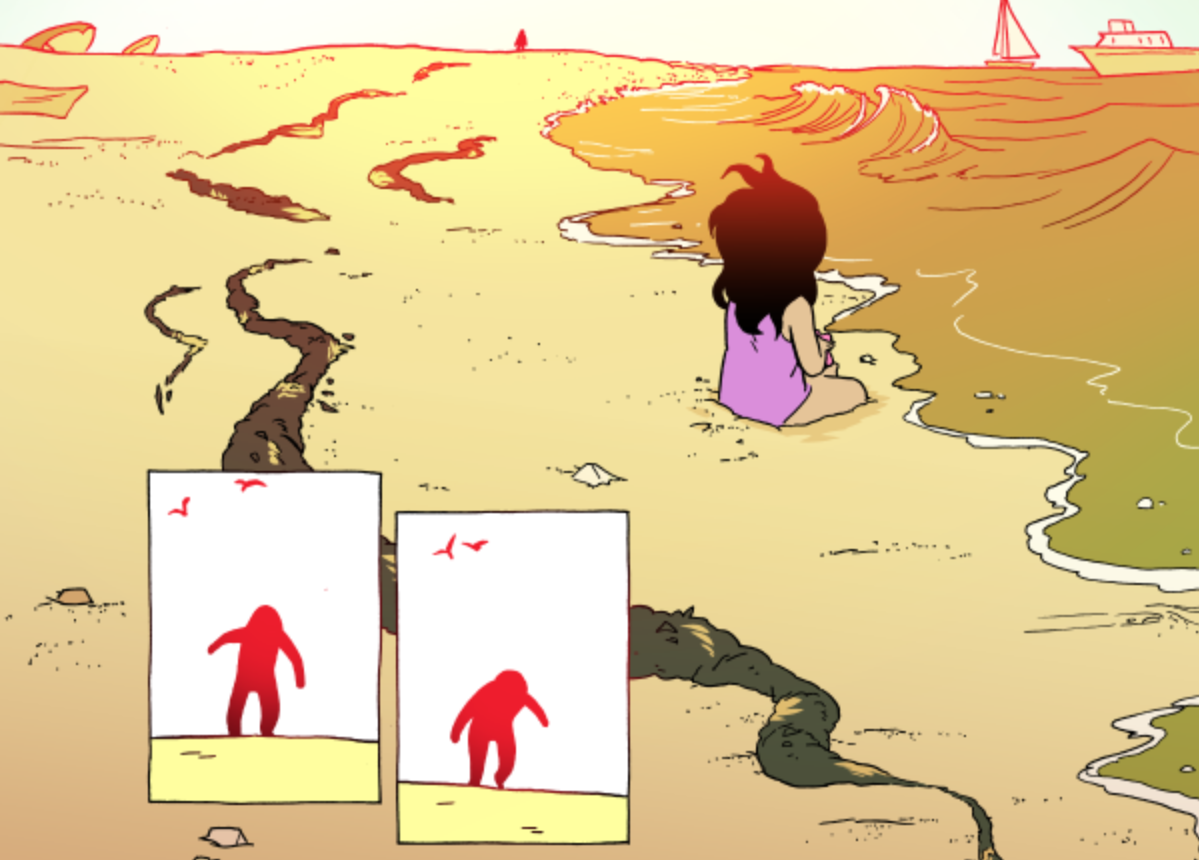
Octopus Pie starts like any webcomic of the early 2000s. Eve Ning is a grumpy young woman who works at an organic grocery store. Hanna is a zany pot smoker who bakes bread while high. They room together in Brooklyn at the height of hipster culture, and cross paths with a growing cast of characters: Hanna’s boyfriend Marek, Eve’s coworker Julie, and Will, the local pot dealer.
It’s a classic odd couple dynamic. No matter how much Eve wants to stay at home, or at her job, Hanna drags her out kicking and screaming into the city. Artist Meredith Gran could have kept Eve and Hanna in that eternal blazing Brooklyn summer forever. She did not. Octopus Pie’s only constant is change.
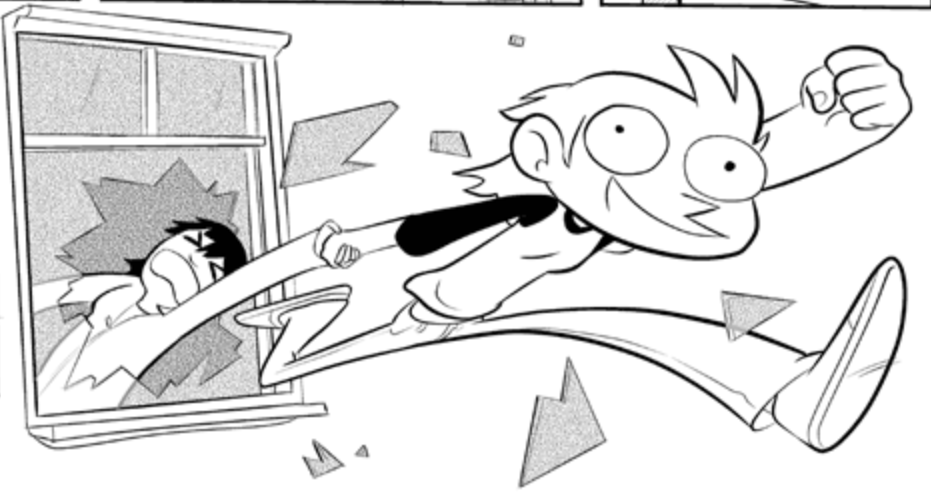
The series progresses through distinct phases during its ten year run. The first is wordy. Eve and Hanna trade barbs with each other that could be lines in a sitcom. There are pop culture references and flashes of surrealism. The second phase keeps the surrealism, but expands the series canvas. The character drawings become simpler and more expressive. Strips swell from just one row of panels to two or even three. Some strips have no words (much less gags) at all.
Gran never stops experimenting. She abandons finesse to tell a few stupid jokes. Kills off her cast via murder mystery. Tells a story from the perspective of a character who may or may not exist. Once she even plays with animation within the framework of a 2D comic.
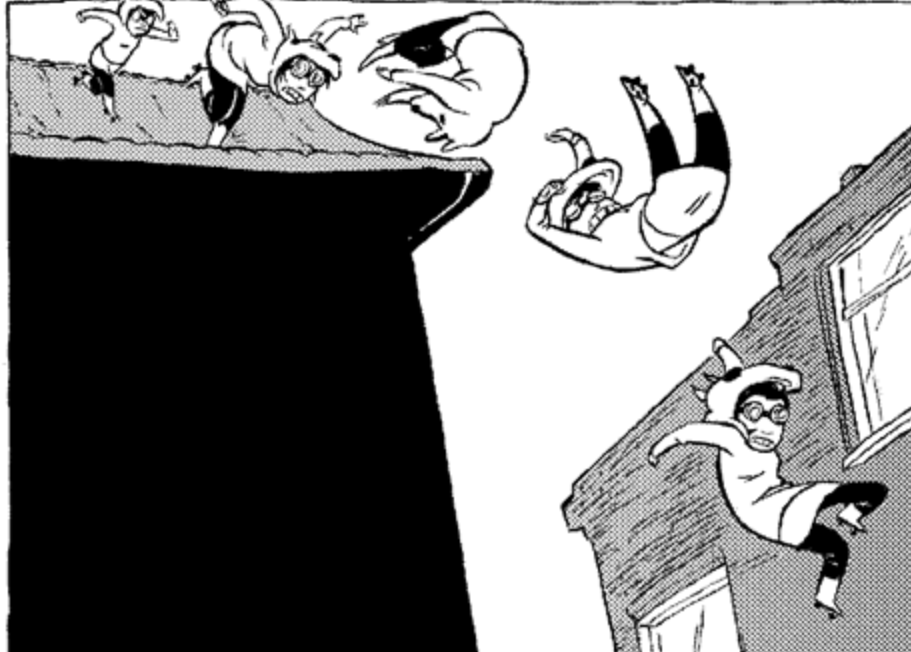
In the process, Eve and Hanna change. Eve loosens up, a lot. In each storyline she drifts from place to place, filling herself up with new people and experiences in pursuit of sensation. As for Hanna, we learn that she is by no means mere comic relief. Instead she is a control freak, manipulating her friends for what she thinks is their own good.
Case in point: Marigold, Hanna’s close friend from college. Hanna loves her but also sees her as beneath her: too naive, too basic, to live her own life. But sooner or later Marigold finds a job, she finds a partner, and she builds a core of self that can exist independently from others. Meanwhile, Marek breaks up with Hanna. In response Hanna burns bridges with Marigold, alienates her peers and briefly becomes the strip’s villain. She comes face to face with the quandary at the core of Octopus Pie: how do you change? How do you move on?
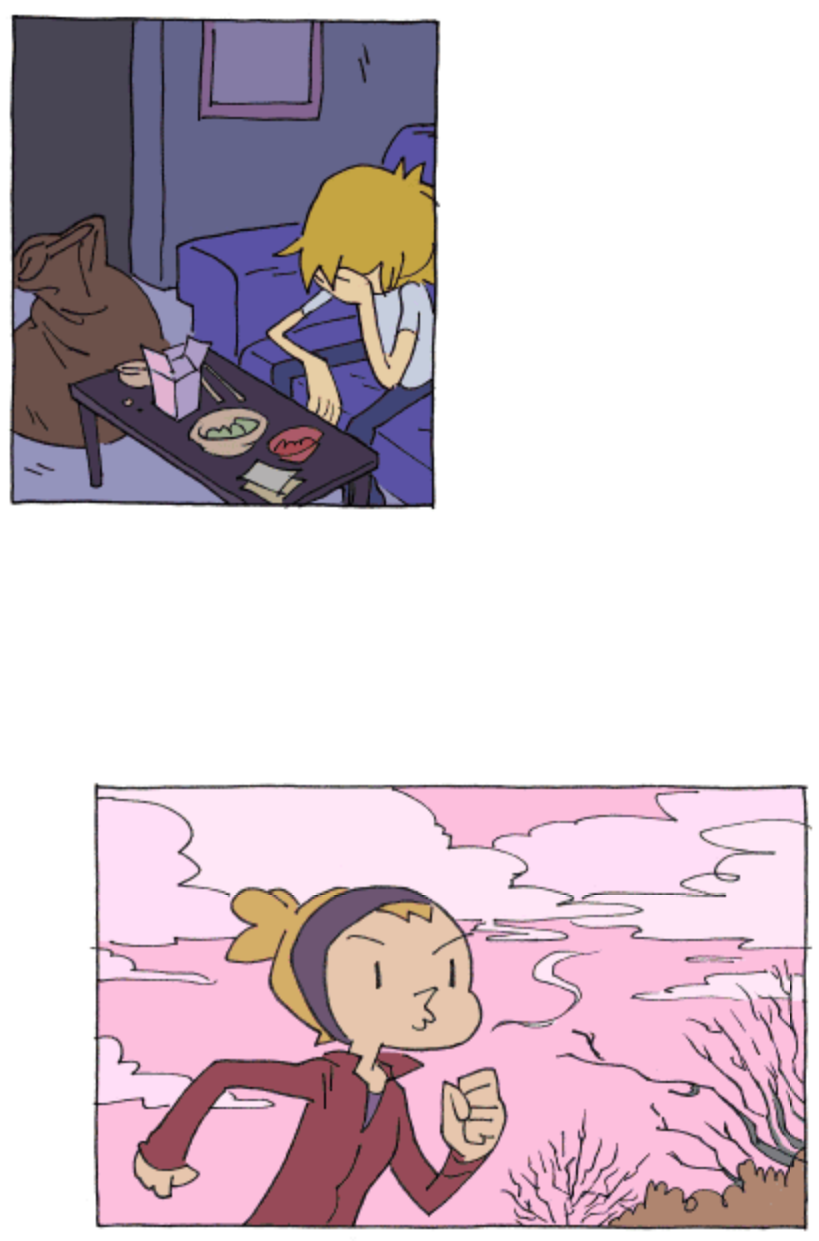
This storyline, “The Witch Lives,” integrates full color with the help of Sloane Leong. Its final strip (also titled “The Witch Lives”) breaks from strip and even page format completely. The old Octopus Pie could not tell the new Hanna’s story, so it changes to fit. Her life is rendered as a long string of panels stretching down the page into oblivion, splinters of memory she struggles to rebuild through routine despite daily setbacks. It is the webtoon format repurposed not as storyboards but as a means of conveying character psychology.
Here Octopus Pie enters its third phase. Valerie Halla picks up colors starting with “Spa Queen,” and then Gran is off to the races. Every subsequent storyline is more confident than the last. This is no longer a weekly comic strip, or even a comic book, but something else: a story told in comic format that wields every affordance of its medium and format to deliver its message. A spaceship burning its past and present for fuel.
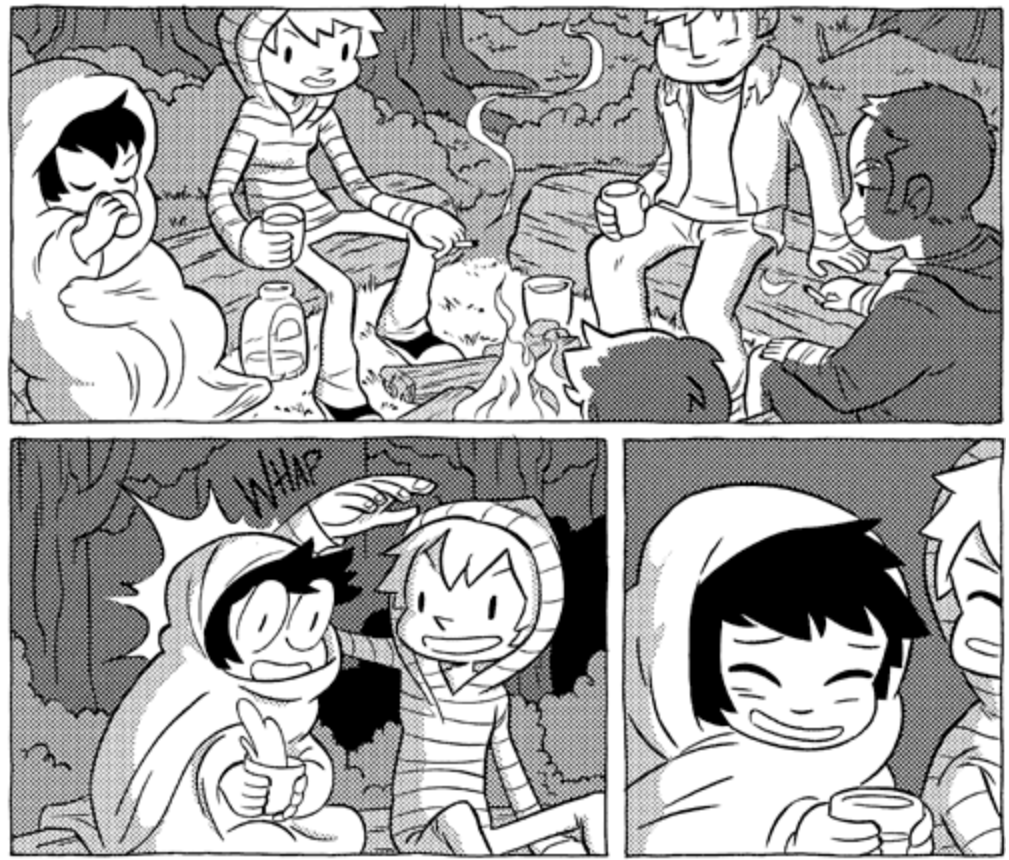
Octopus Pie comes closer than any other comic I’ve read to approximating real life. Its characters do not stand in place. Instead they grow and change to the point that they become unrecognizable. The form of the comic itself mirrors this arc as it warps to meet Gran’s needs. No volume within the complete series box set matches the others. Unfortunate for printers and collectors, but a necessity for what the series is doing.
This is a great thing, for a critic. Yet there’s also something that I find frightening about it, too. The joy of a comic strip is being able to revisit your favorite characters at any time. Charlie Brown is always kicking Lucy’s football; Garfield is always eating lasagna; Calvin and Hobbes are always walking through the snowy woods. Even more soap operatic strips, like For Better or For Worse and Dykes to Watch Out For, keep to the status quo more often than they break it.
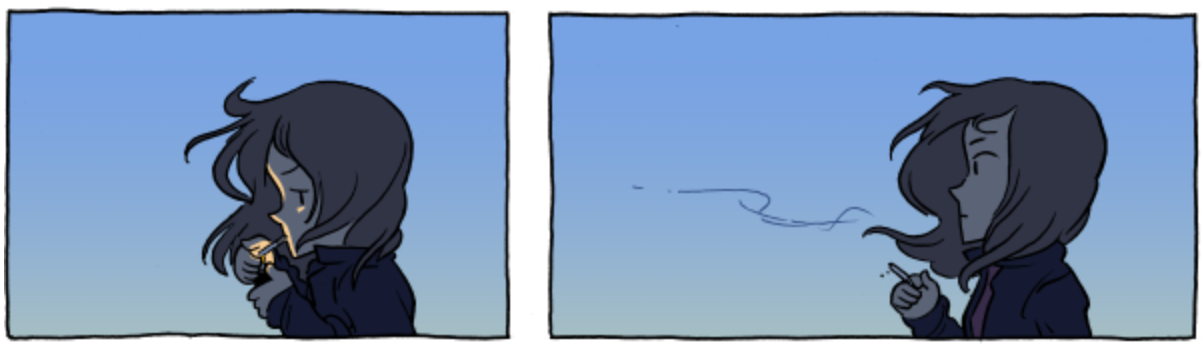
Octopus Pie rejects this completely. Not only does the series format constantly change, but the characters themselves are destroyed and recreated. The Eve of the start, the middle and the end of the comic are not the same. She grows, falls in love, starts drinking, backslides, stops drinking. Then (after the end of the series, in post-lockdown storyline “The Other Side”) she has a baby and everything changes again. There is no such thing as security.
It’s the same with Marigold. She evolves from a side character, to a main character, to a heat sink for Hanna’s jealousy and nihilism, to the single most well-adjusted person in Octopus Pie, through pure force of will. Gran even draws for her what is for my money the sweetest and most romantic scene in the comic. But then she blows up her relationship in 2022’s “Octopus Pie Eternal.” I couldn’t help but gasp–how dare she?! Why destroy something that she built so meticulously?
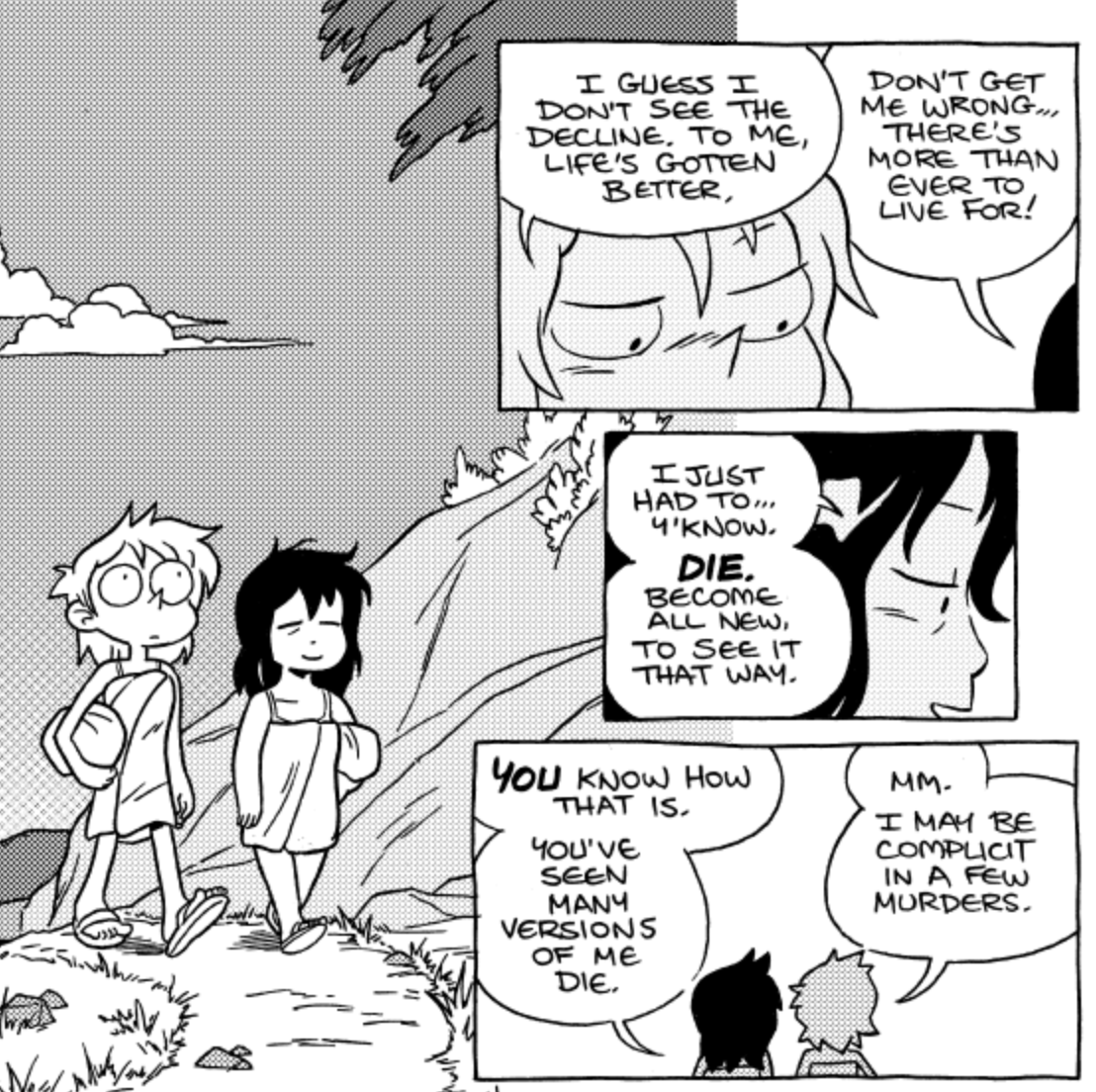
The longer I’ve lived, the more I’ve wondered if the stories we tell about ourselves are honest. We build lifelong narratives out of memories. Yet those memories are selective and rewritten by our own biases. Our cells and bodies, too, change due to external and internal influences. We might think we know why we make decisions, but do we really? Maybe our lives are less like number lines and more like a series of points on a graph that our friends and ourselves connect after the fact.
There are no endings in Octopus Pie. People are always becoming better and becoming worse. What matters is whether they can see themselves honestly and make choices after the fact. Hanna becomes a monster one year and claws herself back to equilibrium by her fingernails in the next. This is normal. What isn’t normal is resisting change, refusing to let go; Octopus Pie reserves its harshest judgements for those who remain stuck in place after a decade.
Aside from sequel comics like “Octopus Pie Eternal,” Gran has left the medium behind. Instead she’s turned to video games as a vessel for her ideas. Her newest game Perfect Tides: Station to Station jumps back in time to 2003 and follows an entirely new group of young adults as they figure themselves out.
It’s no surprise, really. Octopus Pie was always fighting its limits as it grew in size and scope and ambition and technique. So why not change mediums too, from comics to games? The vessel shifts but the contents remain the same. Every cast-off comic strip a husk from which a new Gran emerges, ready for the next stage. Exuviae crushed to a powder by Brooklyn foot traffic. Change is life, stagnation is death.
AMV of the Week
Here's "body in motion mind at rest" by vivafringe.