Shiboyugi: This is a Story About a Deranged World
Anime these days is supposed to be a vehicle for other people’s ideas. Shiboyugi, though, has its own voice.
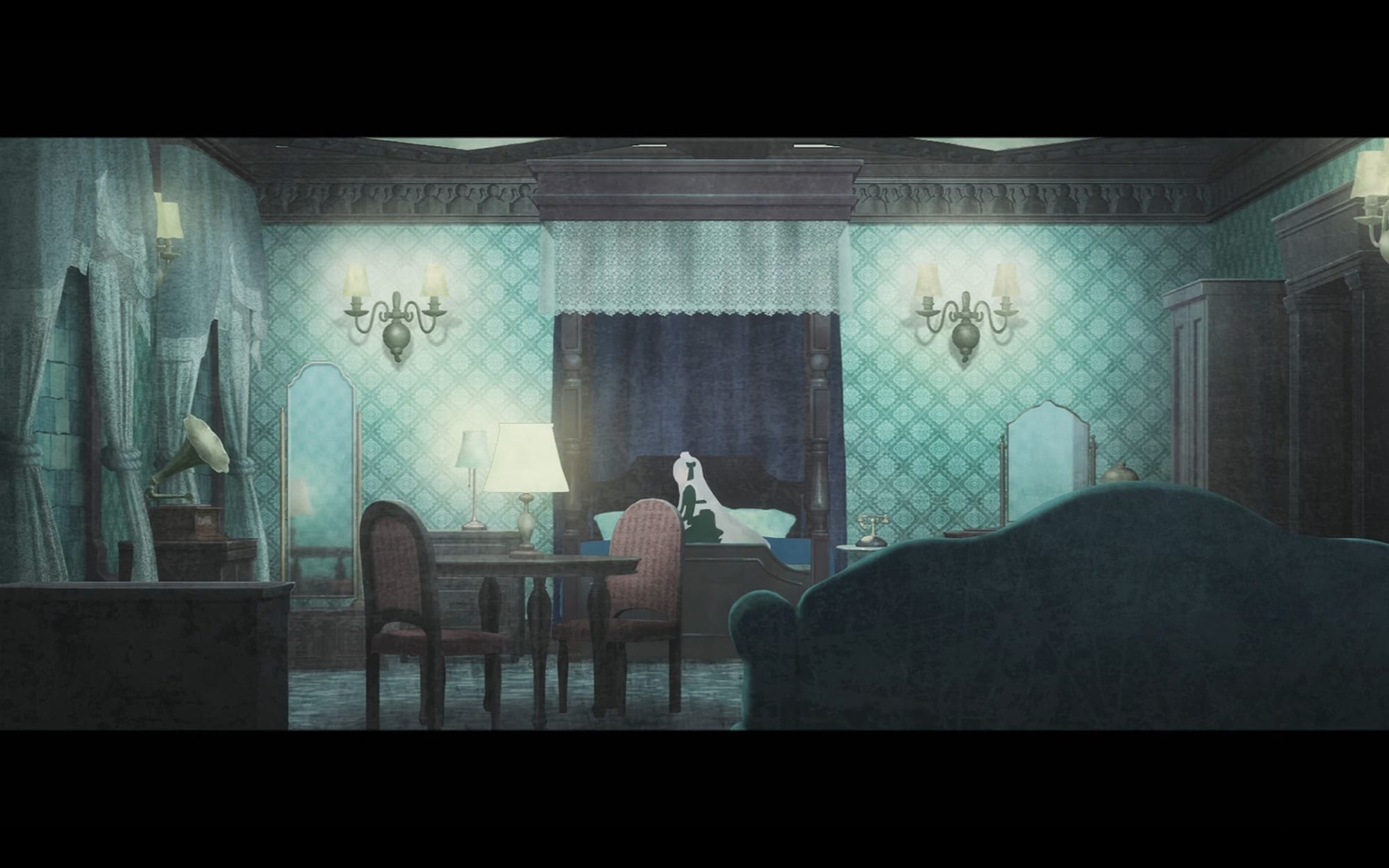
The phone rings, and the girl opens her eyes. Her body lies in a four poster bed. To her left is a wall decorated by curtains without windows. To her right is a small table and a rotary phone. She lifts the handle and listens. There is no sound. “A wake up call?” she asks herself.
The girl looks in the mirror to see that she is wearing a black and white ruffled dress; a maid outfit. She slowly turns in place, then examines the horn of a nearby gramophone. Perhaps she is searching for a bomb. From downstairs comes the sound of breaking glass. She descends the staircase to find five other women, all similarly attired. One of them is crying. Another bravely soothes her.
By the end of the day, three of these women will be dead.
Death game stories have been popular for years across every medium: games, novels, television, movies. From the high-stakes gambling of Kaiji, to the kill-or-be-killed adolescent drama of Battle Royale, to the international success of Squid Game. So long as capitalism demands that we turn on our peers and prostrate ourselves for money, is it any surprise that our pulp fiction reflects that reality back at us?
Death games aren’t just about tragedy though. Just as important is pageantry. Horrible little puppets, elaborate execution sequences, convoluted rules and backdoor tricks. Each serves its purpose. There’s a gladiatorial splendor to the death game at its peak that gets your blood pumping even when your heart should be hurting. That’s why they keep making them and people keep watching them no matter how formulaic they might be.
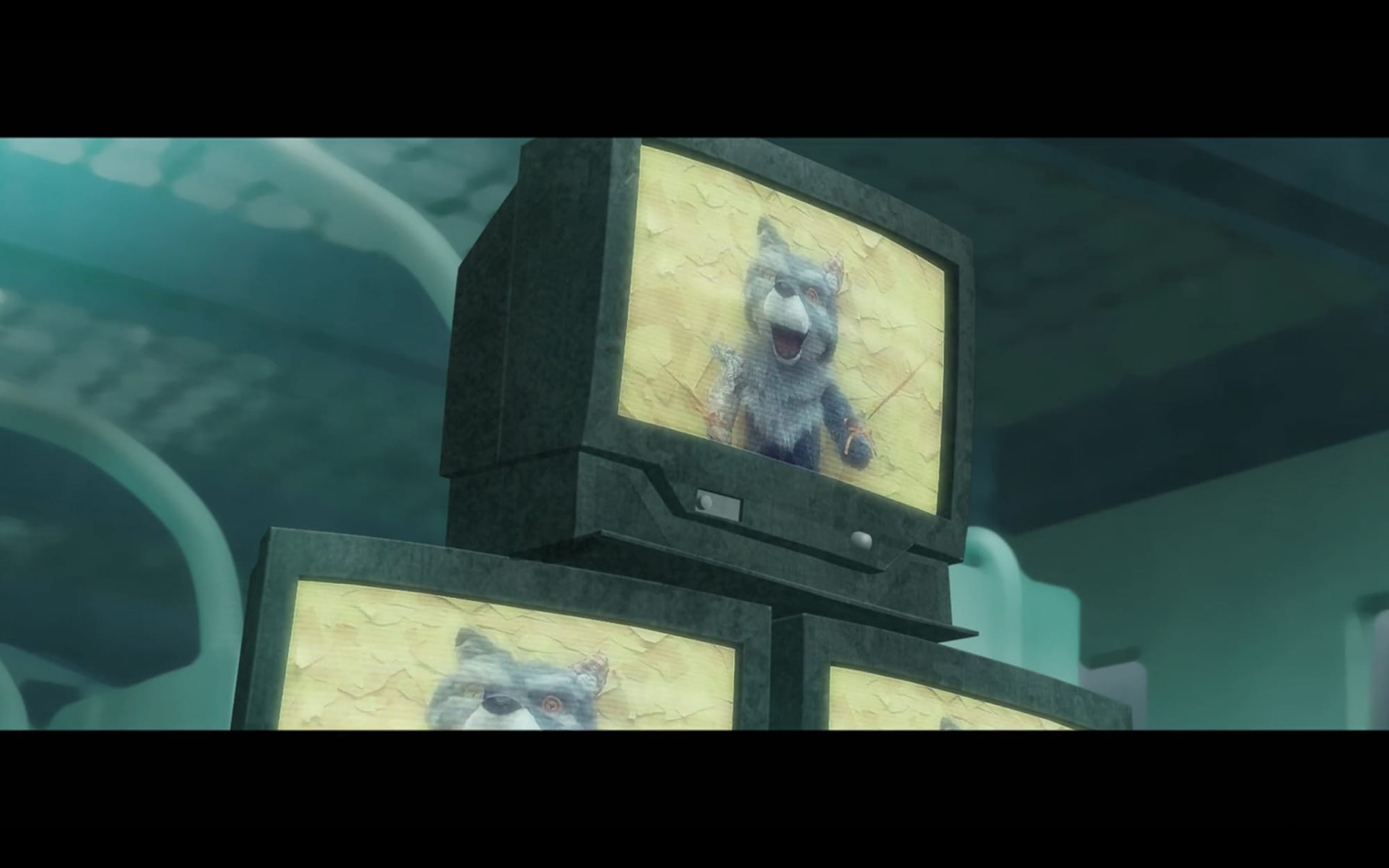
Shiboyugi (also known as Playing Death Games to Put Food on the Table) is special because it does everything it can to deny the viewer that visceral pleasure. Death games in its world are routine, so much so that players have talent agents. The heroine, Yuki, is a professional who has won several dozen times and seeks to win 99 in all. Death games are not a horror for her. They pay a living wage.
Death games are a chance for the viewer to experience a dangerous situation vicariously from the comfort of their home. Yuki refuses us this pleasure. You can’t root for her competence because she refuses to clue the viewer into what she’s thinking. You can’t root for her kindness because, occasionally, she can be very cruel. The narrator describes her actions to us from a detached third person perspective, as if she were being piloted by remote control. She is an enigma.
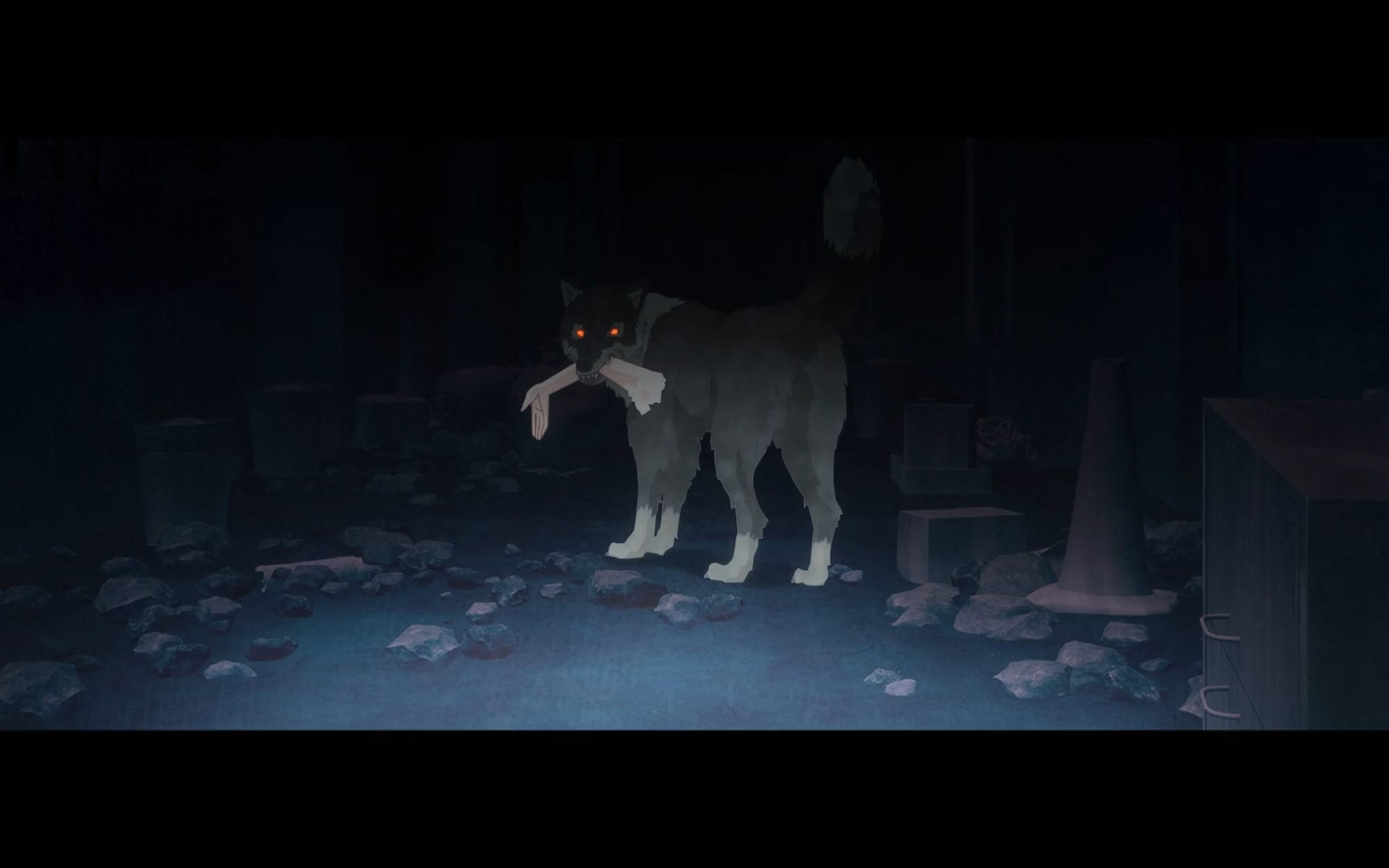
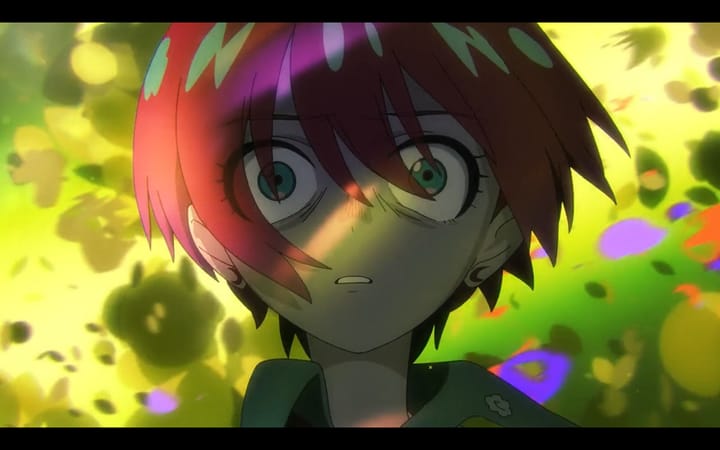
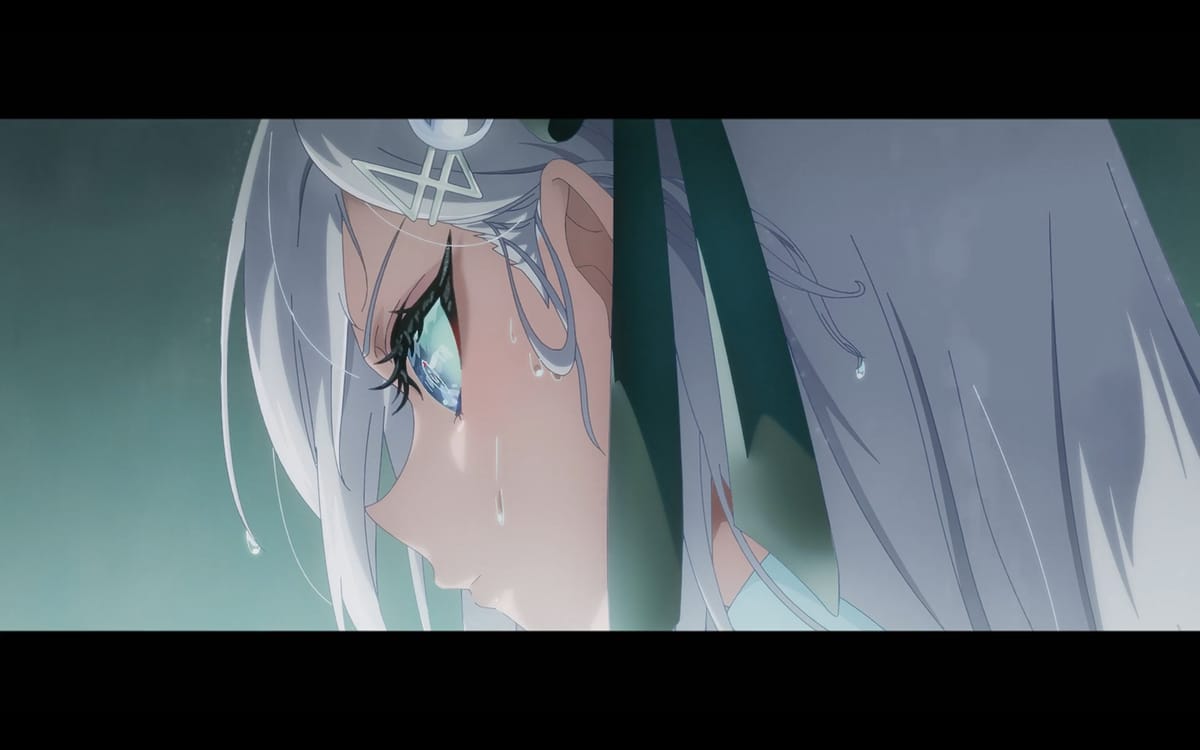
Just as Shiboyugi denies easy self-insertion, it denies opulence. The soundtrack intersperses woodwinds and twinkling piano keys in between long stretches of silence. The show's death game arenas are abstract spaces of light, fabric and stone. Characters are rendered without detail or facial features at a distance, leaving them as perpetually blurred outlines. (In the close-ups, we see that they have huge, gleaming eyes like jewels. This is an exception.)
When death comes it is quiet. A projectile to the head. Acid. Drowning. Players are injected before the game with a substance that transforms their bodies and blood into soft cotton, so that there is no gore. Players might survive, and even recover, from wounds that in any other context would kill them. If they die they leave stuffing rather than a corpse.
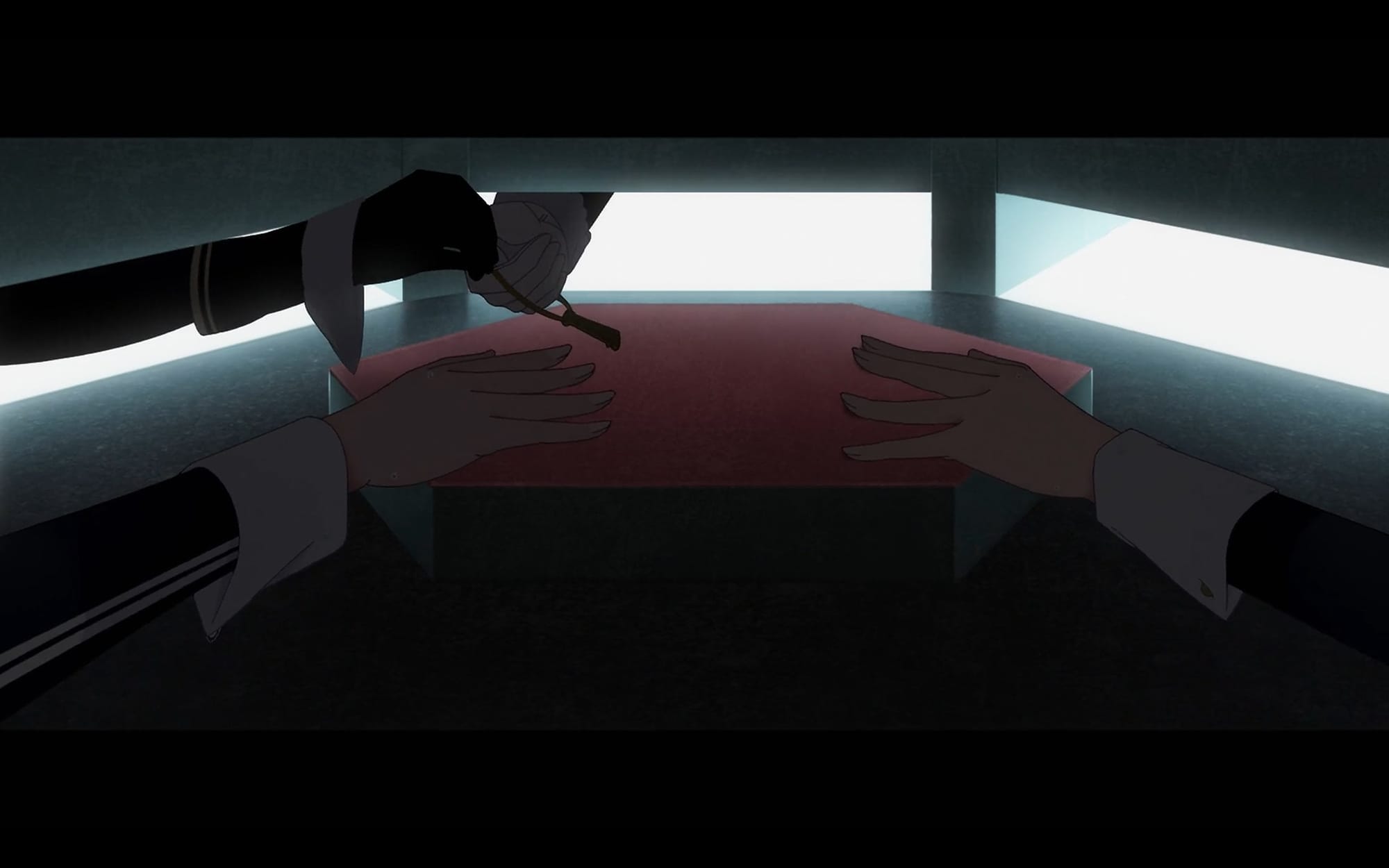
There’s a sequence in the first episode involving a flooding chamber. The players scramble for a key as a bladed mechanism descends from the ceiling. We see hands grasping, cold calculation, fear in the eyes of the odd one out, who sees that she is going to lose. She screams, and we hear the sound of the saw. This is the closest that the series comes to the pageantry of death games.
Just as final is a scene in the fourth episode, where the players vote on who will be killed by deadly gas. We see the victim exhale, and the lights flicker off. That is all we are given–a cut to black, followed by a shot of the survivors. You could call that a “respectful” choice. Yet the series is pointedly not that respectful or dignified. It is a story about girls who are turned into dolls and then torn to pieces, after all.
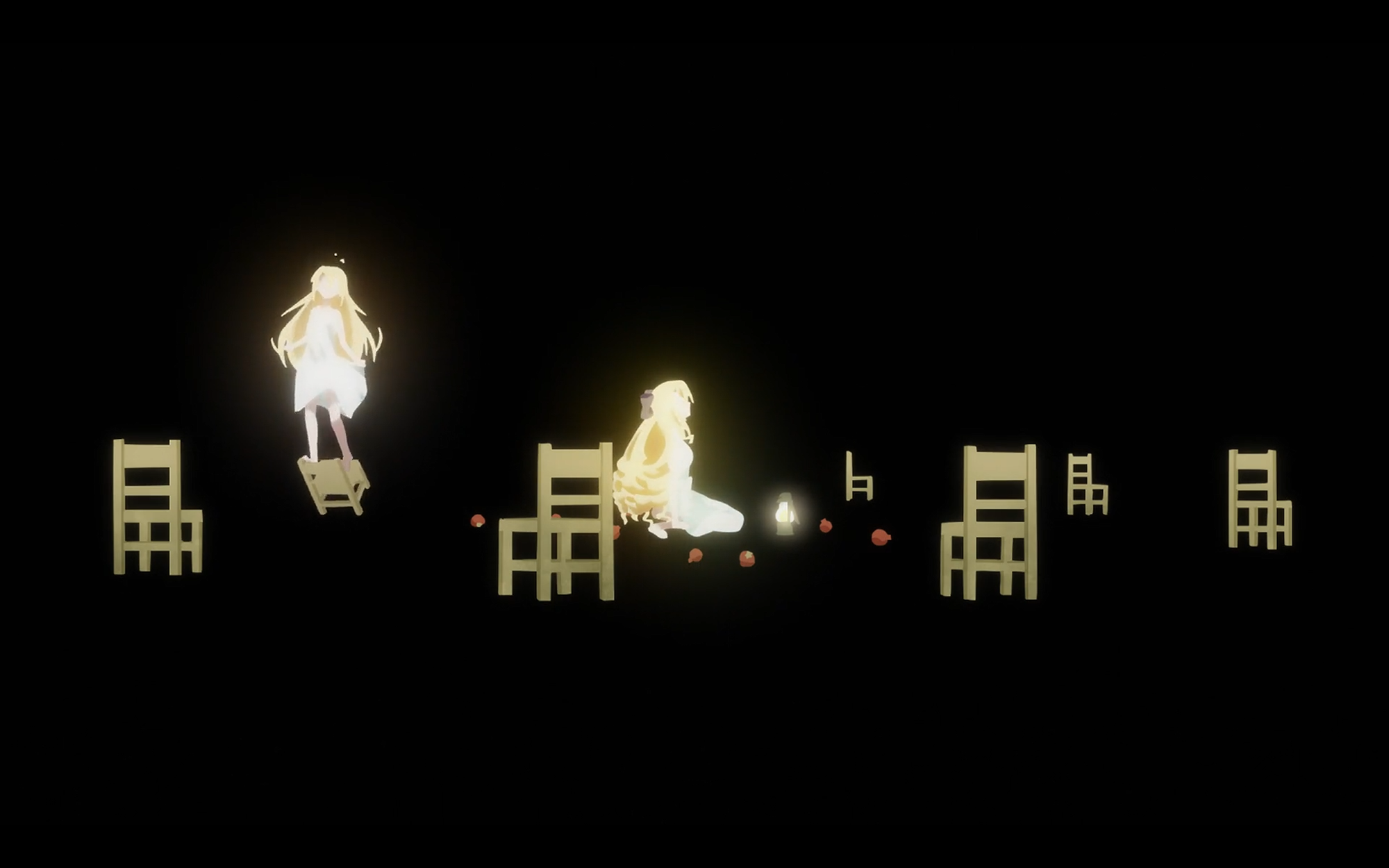
At its heart, this is a show about waiting. Waiting to be killed by a trap, betrayed by your peers, undone at the last second by your mistakes. Life in this world can be tedious and dull. Still, Yuki prefers it to the world outside, where she lies under the covers at home for hours while the trash piles up outside. She only comes alive in life or death situations. Not so different after all from Kaiji, who flourishes as a survivor but always fails as a civilian. Yet Kaiji’s world is a nonstop carnival of electric guitars and ominous sound effects. Yuki’s is an empty theater.
Shiboyugi’s director, Souta Ueno, first grabbed people’s attention after directing the 2024 series Days With My Stepsister. He took a story about a high school boy living with his classmate after their parents’ marriage via slow cinema sensibilities. The show’s animation wasn’t great, but its delivery was groundbreaking, and long-time anime fans knew it. Adaptations of light novels weren’t supposed to look or sound like that.

Shiboyugi is even more unusual. Ueno and his crew adapt the source material out of order; they add scenes clarifying character psychology and eliminate others. The fifth episode is mostly original and yet almost nothing happens. It’s like a dare: how much can the animators accomplish with still shots, recycled footage and empty spaces? A hell of a lot it turns out.
I don’t expect that this series will make any more of an impression on the general public than Days With My Stepsister. Seen from the outside, it’s a simple story about cute girls playing death games. Going deeper requires digging into the technique, and who has time for that? I don’t begrudge folks who have been reluctant to engage with the show on its own terms either. There’s so much anime airing every season that it’s tough to make time for stuff you find unpleasant.
Yet every week I ask myself: how did Souto Ueno get away with this? Anime these days is supposed to be a vehicle for other people’s ideas. Shiboyugi, though, has its own voice. It never lets you forget it.
AMV of the Week
Here's "Thinking of a Place - The War on Drugs" by GonzoZord.